


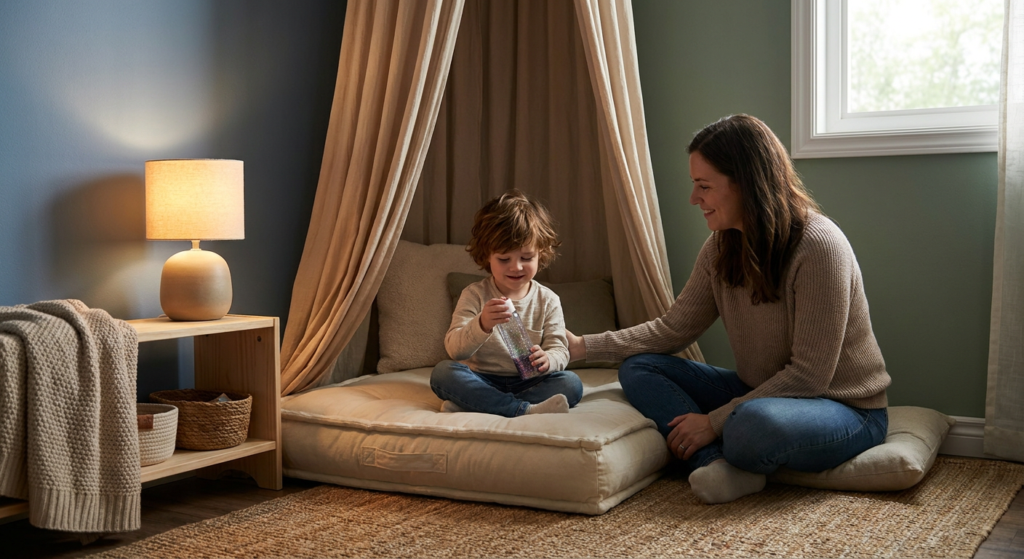
If you are searching for autism sensory room ideas at home, you may not actually need a full extra room. Many families are simply trying to help a child who is overwhelmed after school, stuck in a hard transition, or struggling to recover after sensory overload. A calming corner can give your child a quieter, more predictable place to reset without requiring a major renovation or a long shopping list.
The CDC notes that children with autism may respond to sensory input in different ways, which is one reason home environments can affect regulation. Instead of copying a picture-perfect sensory room, it helps to build a space around your child’s needs, your layout, and the moments you are trying to support most.
This guide can help you decide whether a calming corner, a sensory nook, or a more built-out sensory space makes sense at home, and how to start with the right features instead of too many products.
Do You Need a Calming Corner, a Sensory Nook, or a Full Sensory Room?
A calming corner is usually a small, low-stimulation space used for recovery, quiet breaks, and decompression. A sensory nook is similar, but may include a few more flexible tools for movement, tactile input, or self-regulation. A full sensory room is a larger, more dedicated setup with space for multiple sensory experiences.
For many families, a calming corner is enough. If your child mainly needs a consistent place to recover after hard moments, wind down before bed, or step away from noise and visual clutter, a bedroom corner, living-room nook, or small shared-space setup can work well. A more built-out home sensory space may make sense when you have the room, the child uses several types of supports throughout the day, and the family has a clear plan for how the space will be used.
The key point is that you do not need a full room to create a helpful regulation space. A small setup can still be meaningful when it is built with purpose. At the same time, if your child has frequent unsafe behavior, severe distress, or needs that are hard to support safely at home, a calming corner should be treated as one support tool, not a substitute for individualized professional guidance.
If you are also building broader home routines, a related guide on at-home regulation activities can help you expand beyond the corner without making the setup feel too busy.
RESET Corner Map
R — Regulation Goal First
Before choosing items, decide what the space is meant to do. Is it mainly for post-meltdown recovery? Transition support? Quiet breaks during a busy day? Bedtime wind-down? Homework decompression?
This matters because one space should not try to solve everything at once. A preschool child who needs help calming after sensory overload may do better with a simple, low-stimulation setup used for one purpose. A school-age child may be able to use the space across more defined routines, such as after school, before homework, and before bed. Starting with one main goal usually leads to a calmer, more useful space.
E — Environment Fit
Choose the location based on what your child needs and what your home allows. Look at noise level, overhead lighting, foot traffic, privacy, supervision, and how easy it is to keep the area consistent.
A bedroom corner may work well for bedtime wind-down. A living-room nook may be better if your child still needs close supervision. In shared homes or apartments, a portable setup with a basket, floor cushion, and visual divider may be more realistic than trying to claim permanent square footage. The best environment is not always the quietest one; it is the one your family can actually use consistently without making the child feel isolated or out of sight when supervision is still needed.
S — Sensory Match
Try to match the space to your child instead of building from generic inspiration. Some children seek movement, pressure, or tactile input. Others avoid bright light, noise, clutter, scratchy textures, or too many visual choices.
Younger children may show these patterns through behavior more than words. They may crawl into tight spaces, cover their ears, avoid certain fabrics, or crash onto cushions. Older children may be able to tell you what feels calming, too bright, too noisy, or distracting. Your goal is not to label every sensory preference perfectly. It is to notice what tends to help and what tends to increase stress.
E — Essential Supports Only
Start with the smallest useful set of supports before adding extras. In most cases, that means choosing a few strong basics across these functions:
- Seating or body support: floor cushion, beanbag, small mat, or soft chair
- Tactile comfort: one or two preferred comfort items, such as a blanket, stuffed item, or fidget
- Visual calm: lower light, fewer bright patterns, limited wall clutter
- Sound reduction: quieter placement, soft furnishings, or child-tolerated headphones
- Movement or regulation input: a simple option such as a rocking seat, stretch band, or heavy pillow if that fits the child
More sensory items are not always better. Too many choices can make the space feel busy, distracting, or harder to use consistently. If you are adding related home sensory activities elsewhere in the day, keep this corner focused so it still feels calm.
T — Transition Plan
A calming corner works best when your child knows how and when to use it. Think about how they enter the space, what words you use, and what signs show it is helping.
A supportive transition plan might sound like: “Let’s take a quiet break,” or “You can sit here until your body feels calmer.” That keeps the space from feeling like punishment. It also helps to notice timing. Some children use the space best before overload builds, while others need it after a hard moment to recover.
If your child regularly becomes more distressed in the corner, refuses it every time, or seems more activated once inside, the setup or the approach likely needs to change. A related caregiver carryover guide can help families stay consistent in how the space is introduced across routines.
What to Put in a Calming Corner First
A strong minimum viable setup usually includes:
- a comfortable seating option or soft landing spot
- one or two tactile or comfort items
- a way to soften lighting or reduce glare
- a sound-reduction option
- reduced visual clutter
Some sensory-room ideas adapt well to a smaller space. Soft lighting, a small canopy, a weighted lap pad, a simple wall visual, or a low shelf for a few predictable items can all work without turning a corner into a full room. The goal is function, not decoration.
For preschool children, keep the setup simple, soft, and safe, with fewer loose items and close attention to supervision. For school-age children, you can usually build in more self-directed choices, such as a journal, breathing visual, resistance band, or preferred calming tool. Color matters only to the extent that it reduces visual overwhelm. Muted, predictable colors are often easier to tolerate than bright, busy patterns, but there is no single “best” color for every child.
How to Match the Setup to Your Child’s Sensory Pattern
If your child tends to seek movement or input, look for signs such as crashing, pacing, constant touching, or difficulty settling without body-based feedback. These children may respond to a corner that includes pressure, movement, or active calming tools in small amounts.
If your child tends to avoid noise, bright light, touch, or busy visuals, the better setup may be quieter and more protected. Lower lighting, fewer objects, softer textures, and a stronger sense of predictability may matter more than adding stimulating sensory tools.
Before buying more items, ask simple questions: When does my child seem most overwhelmed? What do they reach for on their own? What makes hard moments worse? What do they ignore? Test one change at a time for several days so you can see whether a single adjustment actually helps. A related caregiver support resource can be useful if you want more ideas for tracking what works across home routines.
Budget-Friendly and Small-Space Setup Ideas
You do not need to spend a lot to make the space useful.
- Low-cost DIY setup: floor pillow, soft blanket, one comfort item, lamp instead of overhead light, and a simple basket for calming tools
- Moderate upgrade: beanbag or foam chair, a few preferred sensory items, headphones, small shelf, and a visual boundary such as a tent panel or curtain
- More built-out calming corner: more durable seating, better storage, layered lighting control, and a few carefully chosen regulation tools based on your child’s sensory profile
For apartments, the best setup may be one wall, one basket, and one routine. In shared sibling rooms, use clear boundaries and keep the item count low. In a multipurpose living area, choose tools that store quickly so the space is easy to reset. If your child moves between homes or settings, a portable calming kit may work better than a permanent corner.
Start with two or three core features and use them consistently before spending more. Price does not make a space effective. A simple setup that your child actually uses is more valuable than a more expensive one that adds visual or sensory clutter.
If your family uses a broader parent-support hub or home-support resource, this topic often fits naturally alongside those routines without needing a separate room.
Mistakes and Safety Guardrails to Avoid
One common mistake is overfilling the space. Another is choosing bright, noisy, or novelty items that look helpful but actually increase stimulation. Families also run into trouble when they build without a clear goal or expect the corner to work immediately in every situation.
Keep safety in view from the start. Watch for tripping hazards, climbing risks, breakable décor, cords, unstable shelves, and items that are hard to clean or store safely. In younger children, fewer loose parts and closer supervision often matter more than adding more tools. In older children, the space still needs clear boundaries so it stays predictable instead of becoming another place for escalation.
The NIMH describes sensory sensitivity as part of the broader autism picture, but environmental changes alone do not solve every regulation challenge. If your child has frequent self-injury, elopement risk, severe sleep disruption, or persistent high distress across daily routines, it may be time to seek support beyond a DIY home setup. Skyward Spectrum encourages families to view calming spaces as one part of a wider, individualized support plan rather than a complete solution on their own.
A related article about expectations and progress at home can also help families judge whether the space is improving regulation or just adding another layer of trial and error.
Calming Corner Builder Worksheet
Use this worksheet before you buy items and again after one to two weeks of real use:
- Regulation goal: What is the main job of this space?
- Common triggers: What situations usually lead your child to need it?
- Sensory profile clues: What does your child seek, avoid, or tolerate best?
- Space constraints: Where can this setup live, and what limits do you need to work around?
- Must-have supports: Which two or three items seem most likely to help?
- Avoid/remove items: What tends to overstimulate or distract your child?
- Budget tier: Are you starting with low-cost basics, a moderate upgrade, or a more built-out corner?
- Caregiver script: What calm, supportive words will you use when offering the space?
- Safety check: Are there any supervision, storage, or breakage concerns to address first?
- 2-week review notes: What helped, what was ignored, and what should you remove or change?
This kind of worksheet can make the process feel more manageable because it keeps the focus on fit, not buying more.
FAQ
What should be in an autism calming corner at home?
Start with the basics: a comfortable place to sit, one or two calming or tactile items, softer lighting, reduced visual clutter, and some kind of sound control if your child needs it. The best setup depends on the child’s regulation goals and sensory profile.
How do you make a sensory room at home without a full extra room?
Use sensory-room principles in a corner, nook, or portable setup. A small area with predictable tools, better lighting control, and fewer distractions can support regulation even if you do not have a dedicated room.
How much does it cost to set up a calming corner or sensory space?
It can be very simple or more built out. Many families can start with low-cost basics they already have at home and add only after they see what the child actually uses.
What colors are best for a calming corner?
Choose colors that reduce visual overwhelm rather than chasing one “perfect” calming shade. In many cases, softer and less visually busy options are easier to tolerate than bold patterns or high-contrast décor.
How do I know if my child needs movement items or quieter sensory supports?
Watch what your child does during stress and what they seek on their own. Children who seek movement or pressure may benefit from body-based tools, while children who avoid noise, light, or touch may need a quieter, more protected space. Make one change at a time and observe the response.
Can a calming corner help with meltdowns or sensory overload?
It can help by giving your child a more predictable place to recover, but it is not a cure-all. If the child is regularly unsafe, highly distressed, or not improving with environmental changes, outside professional guidance may still be needed.


