


If you’re thinking about autism school readiness before kindergarten, it’s common to wonder whether your child can handle the routines, communication demands, and transitions that come with a classroom. For many families, the question is not whether a child with autism looks “typically ready.” It is whether kindergarten can be made accessible with the right preparation and supports in place.
The transition to kindergarten can feel pressure-filled because the timeline is fixed, while your child’s skills may still be uneven. A child may do well with communication but struggle with noisy transitions. Another may follow routines at home but need more help with group participation. That does not mean kindergarten is out of reach. It means the goal is to understand what to practice before the first day, what to share with the school, and where added support may help.
Quick Checklist: What Autism School Readiness Looks Like Before Kindergarten
Before going deeper, it helps to look at readiness as a snapshot across several areas rather than one pass-or-fail standard.
- Can your child join a short group activity, even with prompts or visual supports?
- Can your child move between activities with some predictability and support?
- Can your child communicate basic needs, using speech, AAC, gestures, or visuals?
- Can your child manage core daily routines such as bathroom steps, lunch, or putting belongings away with some level of support?
- Are you able to identify likely sensory triggers and the tools that help your child recover?
- Do you know what information the teacher or school team will need before day one?
For ages 4–5, these questions usually show up in practical kindergarten moments: lining up, sitting for circle time, separating from a caregiver, moving to the bathroom, handling lunch, waiting briefly, and shifting from one activity to the next. Some of these skills can be supported through classroom accommodations rather than mastered independently before school starts.
What School Readiness Really Means for a Child With Autism
School readiness for a child with autism is not about looking like other children on the first day of kindergarten. It is about being able to access the classroom, participate in routines, and communicate needs with the supports that fit that child. Academic skills matter, but they are only one part of the picture.
In many cases, the harder parts of the kindergarten handoff are not letters or counting. They are transitions, sensory load, classroom expectations, separation from caregivers, and getting help when something feels hard. That is why it helps to separate two questions: What skills should we keep building now? And what supports should the school be ready to provide?
A child may still need prompting for toileting steps, visual support for a morning routine, or extra help during noisy parts of the day. Those needs do not automatically mean the child is not ready. They may simply mean readiness depends on planning, communication, and a clear support plan.
Bridge-to-Kindergarten Readiness Map
A practical way to think about readiness is to use a Bridge-to-Kindergarten Readiness Map. This means looking at what your child can already do, what tends to get in the way, and what supports will matter most once school begins.
Current participation snapshot
Start by looking at where your child is already showing kindergarten-related participation in daily life. That might happen in preschool, daycare, therapy groups, community outings, or structured home routines. A child who can join a short group song, follow a simple clean-up routine, tolerate a brief wait, or separate from a caregiver with support is already practicing important classroom access skills.
These signs do not need to look polished to count. What matters is whether your child can participate at least part of the way when the environment is predictable and supports are available. For a preschooler heading into kindergarten, that may look like joining circle time for a few minutes, walking through a basic routine with prompts, or moving from one activity to another without becoming overwhelmed each time.
Regulation and sensory load
Kindergarten places demands on regulation that many families notice right away. Noise during transitions, waiting in line, group instruction, cafeteria sounds, playground shifts, and unexpected schedule changes can all increase stress. For some children, dysregulation shows up as refusal, shutdown, bolting, crying, or difficulty rejoining the activity once upset.
The question is not whether sensory needs should be “fixed.” It is whether you understand which parts of the school day are likely to feel hardest and what supports help your child recover. A visual schedule, movement break, headphones, quieter transition routine, or extra preview of what comes next may make a meaningful difference. Guidance from sources like the Indiana Resource Center for Autism and Reading Rockets also supports the value of school previews, routines, and information-sharing before the transition begins.
Independence and routine handling
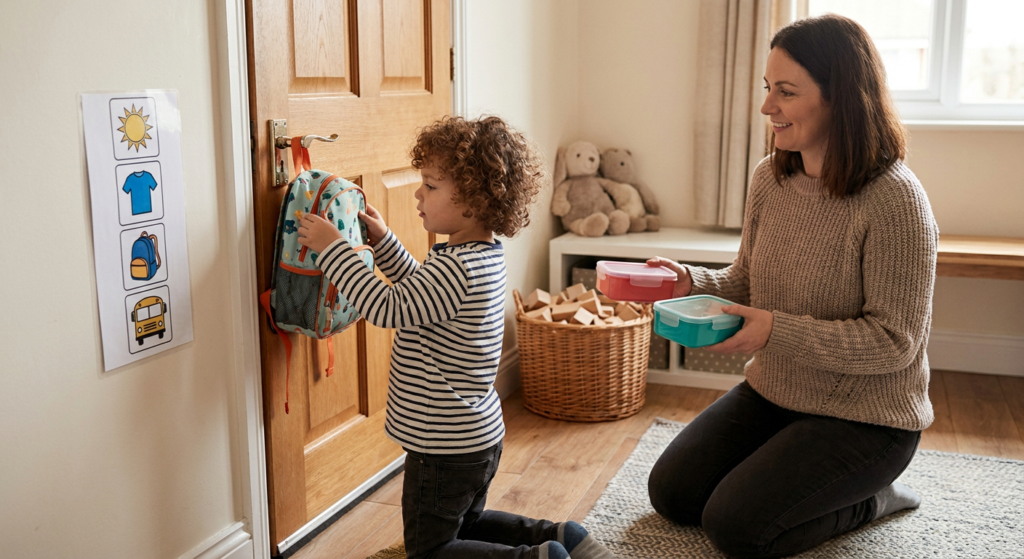
Daily routines matter because kindergarten moves quickly. A child may need to manage parts of toileting, follow a short bathroom sequence, carry a backpack, open lunch items, put materials away, or shift through a simple classroom routine. These are practical access skills, not just self-help goals.
At the same time, partial independence can still be workable. A child may not complete a whole routine alone but may succeed with visual prompts, repeated practice, or adult support. That is useful information. Instead of asking whether your child can do a task perfectly, ask how much support is still needed and whether that support is realistic to plan for in a classroom setting.
Communication and group access
Communication readiness is about functional access, not just spoken language. A child may be ready for kindergarten if they can express needs, ask for help, show discomfort, respond to a short instruction, or participate in a shared activity using speech, AAC, gestures, visuals, or a combination of supports.
This matters in everyday classroom moments: indicating the bathroom is needed, telling an adult something hurts, following a direction like “sit on the carpet,” joining a song with motions, or showing that a break is needed. Non-speaking children and children with limited spoken language can still participate meaningfully when communication supports are in place. Speech alone is not the test of readiness.
Next-step support plan
Once you look across participation, regulation, routines, and communication, sort concerns into three groups: what to practice at home, what to share with the school, and what may need extra support from your care team. This keeps readiness planning concrete.
For example, a lunch routine may be something to practice. A known sensory trigger during loud transitions belongs in the teacher handoff. A child who cannot communicate basic needs or who becomes highly distressed across multiple daily routines may need a stronger support conversation before school starts. The goal is not to eliminate uncertainty. It is to move from worry to a practical plan.
Skills to Practice Before the First Day of Kindergarten
The most helpful preparation is usually short, realistic practice built into daily life. That can include following a simple morning routine, sitting for a brief group activity, practicing bathroom steps, opening lunch containers, putting a folder in a backpack, and transitioning away from a preferred activity with a visual cue or countdown.
Keep these practice moments brief and repeatable. A few minutes of structured practice is often more useful than pushing for long drills. If your child struggles with group participation, start with a very short shared activity at home. If bathroom routines are hard, practice the specific steps that tend to break down. If separation is a concern, use short preview-based drop-offs or handoff routines when possible.
The aim is familiarity, not performance. You are helping your child recognize patterns they will see at school and identifying where support still needs to be built around them.
How to Prepare the School Handoff
A strong handoff can lower stress for both your child and the school team. Before kindergarten begins, try to share a clear, simple picture of how your child communicates, what tends to trigger stress, and which supports are most effective.
Helpful information to include may include:
- how your child communicates wants, needs, discomfort, and requests for help
- sensory triggers such as noise, waiting, crowded spaces, or unexpected changes
- calming strategies that work, such as movement, visuals, breaks, or reduced language
- toileting, lunch, dressing, or transition notes that affect school participation
- separation strategies that make drop-off smoother
- strengths, interests, or motivators that help your child engage
If possible, ask about a classroom visit, school preview, or short transition plan before the first day. Photos of the classroom, teacher, bathroom, cafeteria, or arrival area can also help a child begin building familiarity. The goal of the handoff is not to deliver a long report. It is to make it easier for the school team to respond effectively from day one.
When “Not Ready Yet” Means More Support, Not Failure
Many parents worry that needing prompts or struggling in a few areas means their child is not ready for kindergarten. In reality, uneven readiness is common. A child may be strong in one domain and still need significant support in another. That does not mean failure. It means the transition plan needs to be more intentional.
It is worth having a stronger conversation with the school or care team when concerns affect safety, communication of basic needs, or the child’s ability to recover across routine classroom demands. Examples may include severe distress with transitions, frequent unsafe behavior, inability to signal pain or toileting needs, or dysregulation that is difficult to interrupt once it starts.
These patterns do not automatically rule out school entry, but they do signal that more planning may be needed. For some families, that means discussing accommodations. For others, it means adding support around communication, routines, or regulation before and during the transition. The right question is not “Is my child failing this test?” It is “What support does my child need to access kindergarten more successfully?”
Kindergarten Transition Readiness Checklist
Use this checklist as a planning tool, not a scorecard. For each item, think in terms of doing consistently, needs support, or should be discussed with the school/care team.
Daily Routines & Independence
- Toileting routine steps
- Dressing and basic self-help needed during the school day
- Managing lunch or snack with realistic support
- Carrying and using backpack items
- Moving through a simple morning or classroom sequence
Notice where independence is emerging and where prompts are still needed. That distinction helps you decide what to practice before school starts and what the teacher should know.
Communication & Classroom Participation
- Expressing wants and needs
- Asking for help or indicating discomfort
- Following a short instruction
- Tolerating a brief group activity
- Participating with AAC, visuals, gestures, or spoken language when relevant
Focus on functional classroom access rather than verbal performance. A child does not need to be highly verbal to participate meaningfully in kindergarten.
Regulation & Sensory Supports
- Identifying common sensory triggers
- Managing transitions between activities
- Waiting briefly with support
- Tolerating classroom noise or other environmental demands
- Using tools or routines that help with recovery
This section can guide both home preparation and the school handoff. When you know what tends to overwhelm your child, it becomes easier to plan around it.
School Handoff & Planning
- Preparing a short teacher handoff note
- Planning a school or classroom visit
- Listing accommodations or supports to discuss
- Organizing key information for a transition meeting
- Identifying what the school should know before day one
A useful checklist should leave you with a conversation plan, not just a list of worries. If a concern belongs in a school discussion, note it clearly and bring it forward early.
FAQ
How do I know if my child with autism is ready for kindergarten?
Look at readiness across routines, participation, communication, and regulation. If your child can access parts of a classroom-like routine with support, communicate basic needs in some form, and recover with help when things feel hard, that is meaningful readiness information. Skills do not need to be even across the board for kindergarten to be possible.
What skills matter most for autism school readiness?
The most important skills are usually communication, transitions, regulation, daily routines, and basic classroom participation. For a child ages 4–5, that may include separating from a caregiver, tolerating a short group activity, following a simple direction, handling parts of lunch or toileting, and moving from one activity to the next with support.
How can I help my child handle routines and transitions at school?
Use previews, visual supports, short repeated routines, and practice in everyday settings. You might rehearse a backpack routine, use a first-then board, practice short transitions away from a preferred activity, or show photos of the school environment ahead of time. Keep practice manageable and consistent.
What should I share with the teacher or school team before kindergarten starts?
Share how your child communicates, what tends to trigger stress, what helps them regulate, and any important notes about toileting, lunch, separation, or transitions. It also helps to share strengths and interests that support engagement. A short, clear handoff note is often more useful than a long explanation.
How do sensory needs affect kindergarten readiness?
Classrooms can add noise, waiting, crowding, and sudden transitions that increase overload for a child with autism. Sensory needs can affect participation, recovery, and comfort during the day. Planning supports ahead of time can make the environment more accessible and reduce avoidable stress.
What if my child is not fully independent with toileting, dressing, or meals yet?
That does not automatically mean your child is not ready for kindergarten. The more important question is how much support is still needed, where breakdowns usually happen, and what the school should know before the first day. If these routines are hard enough to affect safety, communication, or daily participation, it may be worth having a deeper planning conversation with the school or care team.
Skyward Spectrum works with families across home, school, and community settings, so if your child needs more support around routines, communication, or regulation before kindergarten, the next step is not panic. It is a clearer plan.


