


Somewhere around freshman or sophomore year, a specific worry creeps into a lot of parents’ minds. What happens when I’m not there to help? Who makes sure dinner gets cooked, or a bus gets caught, or a debit card doesn’t end up in the wrong hands?
Life skills for teens with autism is exactly the piece of an ABA program built around that worry. This article breaks down how cooking, money, and transportation actually get taught, step by step, and what parents can expect along the way.
Why Independence Skills Deserve Their Own Focus in the Teen Years
The method here is the same task analysis used to teach a young child to brush their teeth, just applied to bigger, more consequential skills. Break a complex task into its actual steps, teach each one, and chain them together. What changes is the stakes, not the process.
This isn’t about checking a box on a progress report. It’s about quality of life years down the road, and research backs up why that distinction matters. Adaptive behavior functioning in individuals with autism is often measurably lower than their cognitive ability would suggest.
A smart, capable teen doesn’t automatically pick up independent living skills just by being smart. They need to be taught, deliberately, the same way any other skill gets taught. Waiting for a skill to click on its own, without direct instruction, tends to leave a wide, avoidable gap.
Cooking and Meal Preparation
Take something as ordinary as scrambled eggs and toast. Broken into a teachable sequence, that’s roughly nine steps: wash hands, get the pan out, crack two eggs, whisk, and heat the stove. Then pour, stir, plate, and turn off the burner. Each step gets practiced and reinforced before the next one is added.
Safety around the stove or a knife gets introduced gradually, not through a blanket rule. Some teens are ready for knife work within a few sessions, while others need weeks with a butter knife first. Both paces are completely fine.
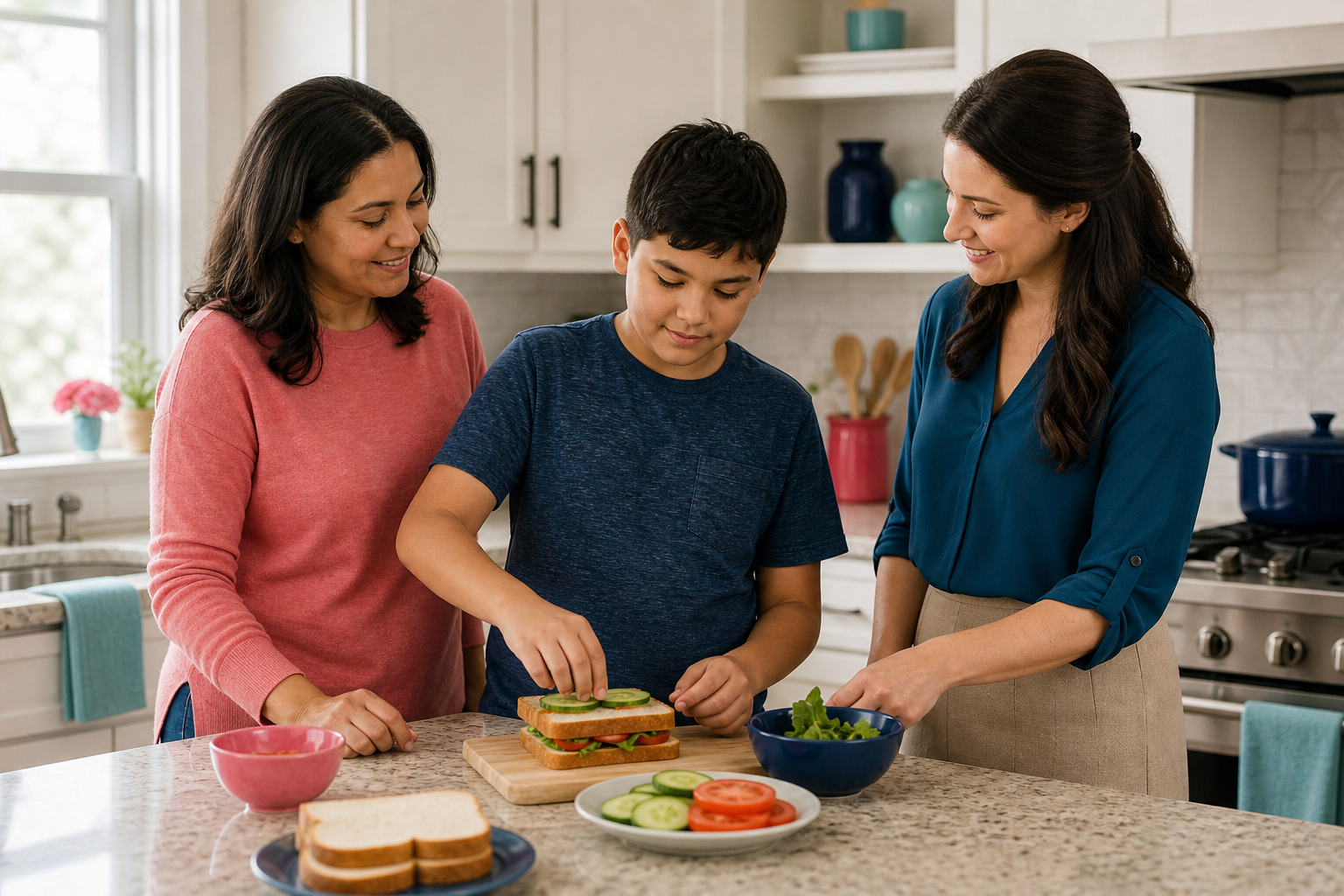
Once scrambled eggs feel automatic, the program usually moves to something with a few more moving parts. A simple pasta dish or a loaded sandwich works well here. The goal isn’t a full recipe binder by graduation. It’s a small, reliable rotation of meals a teen can make without anxiety, even on a night when nobody else is around to help.
Managing Money
Money skills start with knowing that a five and a twenty buy different amounts. From there it’s budgeting a small weekly allowance, and using a debit card without freezing up. Real-life scenarios matter more than worksheets ever will.
One useful practice run: give a teen ten dollars at a store, have them count it out loud, and let them handle the transaction. A parent stands nearby without intervening. Recognizing scams, someone asking to “borrow” money, a too-good-to-be-true text, gets folded in as teens spend more time online.
For older teens closer to working age, budgeting conversations start to include a first paycheck. The basic idea of setting some money aside before spending the rest gets introduced here too. None of this needs to be complicated. A simple three-jar or three-app system, spend, save, and give, tends to land better than a full spreadsheet ever does at this age.
Getting Around: Transportation and Community Navigation
This section looks different depending on where in Georgia a family lives. Metro Atlanta has transit options that simply don’t exist in Augusta or the surrounding counties. We build transportation goals around the reality of the CSRA, not a bus system that isn’t there.
That often means walking route practice to a nearby store or a friend’s house. It also means ride-share safety scripts: what to check before getting in, and what to do if the car doesn’t match the app. Knowing the backup plan matters just as much as knowing the main one.
Some families also practice a simple phone check-in system: a text when a teen arrives somewhere, and another when they’re heading home. It’s not about tracking every move. It’s about building a habit that keeps everyone calmer while independence grows.
Household and Self-Management Skills That Round Out the Picture
Beyond cooking, money, and transportation, a handful of smaller skills tend to matter more than families expect. Doing a load of laundry, and setting a phone alarm and actually waking up to it, both fall into this category. So does keeping a shared space reasonably tidy. None of these are glamorous, but each one removes a small daily obstacle.
Scheduling is often folded in here too. A visual weekly planner, whether on paper or an app, helps a teen track homework, chores, and appointments. It cuts down on a parent repeating the same reminder five times a day. Small, boring systems like this tend to outperform willpower alone, for any teenager, autistic or not.
A Realistic Timeline for These Skills
Families often ask how long it takes before a teen can manage these skills independently, and there’s no single honest answer. A fourteen-year-old starting fresh might need a full school year before cooking a simple dinner solo without prompting. A seventeen-year-old with more existing skills to build from might get there in a few months.
What matters more than speed is the direction of travel. A BCBA tracks progress across these areas the same way any other ABA goal gets tracked. The data simply shows whether independence is genuinely increasing over time.
Slower progress in one area, cooking, say, doesn’t mean money skills or transportation are stuck too. Each skill area tends to move at its own pace.
It’s also worth saying plainly that these skills rarely finish. Even adults keep refining how they cook, budget, or get around as life circumstances change. The goal by the end of a teen program isn’t perfection. It’s a solid, usable baseline a young adult can keep building on after therapy ends.
How This Connects to the Rest of an ABA Program
Life skills goals don’t sit in a separate lane from everything else a teen is working on. A teen practicing conversation skills in a social group is often also the teen learning to order food independently at that same restaurant outing. The skills reinforce each other more than a goal sheet organized by category might suggest.
This is part of why Skyward Spectrum builds programs around the whole person rather than a checklist of isolated targets. A cooking goal often touches on following multi-step directions and managing frustration when a recipe goes wrong. It also builds in communicating a need for help along the way. That single goal does more work than three separate, isolated goals ever could.
How Parents Can Reinforce These Skills at Home
The single biggest lever isn’t a clever technique, it’s plain consistency. A skill practiced one way in a session and a different way at home takes twice as long to stick. Sometimes it never sticks at all.
Visual schedules, checklists, and simple reminder systems help bridge that gap. Research on adaptive skill-building in autism points to structured visual supports as one of the more reliable tools. It’s not glamorous advice, but it’s the advice that actually works.
Parents also help most by resisting the urge to jump in the moment a task gets slow or messy. A teen fumbling through a first solo laundry load is exactly what learning looks like. Stepping back, even when it’s tempting not to, is often the most useful thing a parent can do at that moment.
Common Questions Parents Ask Us
“Is my teen too far behind to start this now?” comes up more than almost any other question, and the honest answer is almost never. Skills build on whatever foundation already exists, whatever that foundation looks like today. Starting later just means the plan accounts for a different starting point.
“What if my teen resists doing this at home?” is another common one. Some resistance is normal, especially around a skill that feels effortful or embarrassing at first. A BCBA can help troubleshoot that resistance directly, rather than leaving a family to guess at what’s driving it.
“Do we need special equipment or a special kitchen setup?” No. Almost everything described here works with whatever a family already has at home. A program built around equipment nobody actually owns isn’t a realistic program. We’d rather build around your kitchen, your bus stop, and your family’s actual routine.
Ready to Build These Skills Together?
If cooking, money, or getting around feels like a distant worry right now, that’s a good time to start. Reach out to Skyward Spectrum and we’ll talk through what a realistic plan looks like. Our piece on ABA therapy for teenagers is a good companion read too.
Meta description: Teaching life skills to teens with autism: how ABA breaks down cooking, money management, and getting around into skills your teen can really use. (146 characters)
Image ALT text: Teenager with autism learning independent life skills like cooking
AI image generation prompt: A natural-light photo of a teenager standing at a home kitchen counter chopping vegetables with a calm, focused expression, an adult nearby offering quiet support, warm domestic setting, documentary photography style, no text overlay.


