


Most parenting advice about autism seems to stop right around age ten, and then puberty arrives anyway, whether a resource exists for it or not. If you’re looking for real, practical puberty autism support, you’re not imagining the gap.
This stage genuinely doesn’t get covered enough. This article is our attempt to close that gap directly, without treating the topic as something to whisper about.
Why Puberty Can Be Especially Hard to Navigate
Puberty brings new sensory experiences on top of ones a child may already find hard to manage. New smells, new sensations, new bodily changes all arrive without much explanation. Layered on top are social and privacy rules that are rarely spelled out explicitly. Closing a door before changing, or knowing what’s appropriate in public versus private, isn’t obvious to everyone.
None of this reflects a parenting failure, even when it feels overwhelming. It’s a genuinely difficult stretch, and it’s common, not rare, for families to feel unprepared for it.
Starting the Conversation Earlier Than Feels Necessary
A lot of families wait for a clear physical sign before bringing up any of this, and that timing often works against them. Introducing basic vocabulary and concepts before the changes actually start gives a child something familiar to anchor to later. That might mean simple picture books about body changes, or short, matter-of-fact conversations well ahead of the first visible sign.
Waiting until a change has already happened means teaching a new concept and managing an unfamiliar sensation at the exact same time. Starting earlier spreads that learning curve out, which tends to make the actual transition considerably calmer for everyone involved.
Teaching Hygiene Routines
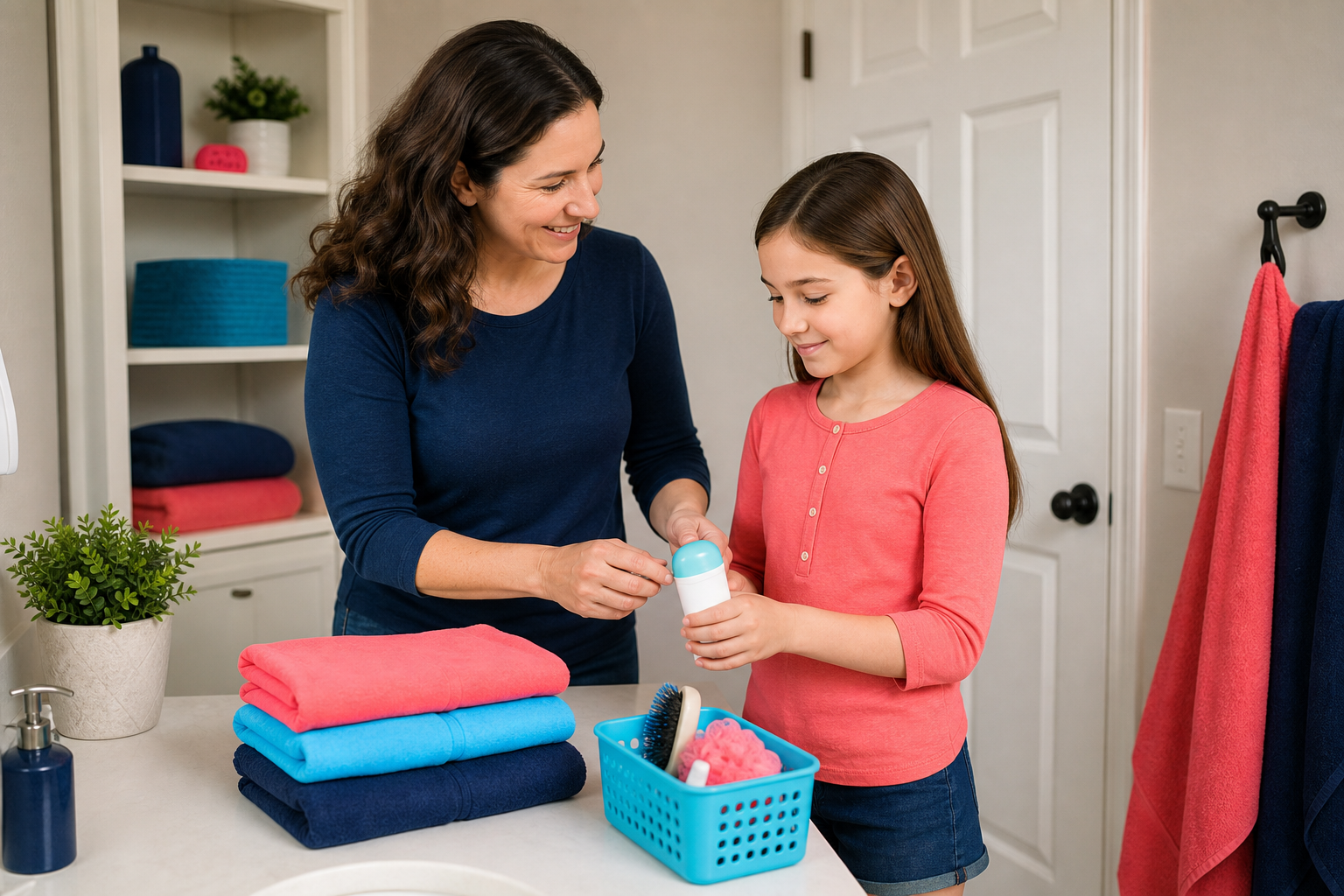
New routines, shaving, using deodorant consistently, or managing menstrual care, respond well to the same task analysis approach used for other skills. Break it into concrete steps, practice in order, and reinforce along the way. Consistency between home and therapy matters enormously here.
A routine practiced one way at a session and differently at home tends to confuse rather than help. Keeping the steps aligned is worth the extra coordination. A visual checklist taped inside a bathroom cabinet often does more work than repeated verbal reminders ever could.
Menstrual care specifically tends to need more repetition than other hygiene routines, given how many small steps and how much sensory tolerance it involves. Practicing with a pad on clothing before it’s ever actually needed helps considerably. Doing it in a calm, low-pressure moment takes real pressure off the first actual instance.
Teaching Privacy and Boundaries
Privacy concepts need to be concrete and teachable, not abstract. Closing a door before changing, or understanding which behaviors belong in private spaces only, are good examples. Recognizing appropriate versus inappropriate touch, both giving and receiving, matters here too.
These get taught the same deliberate way any other skill does, through direct instruction and repeated practice. A simple, consistent rule like “bedroom and bathroom doors closed” gives a concrete anchor that’s easier to follow than a vague sense of “privacy.”
Supporting Emotional Changes
Mood swings during puberty aren’t unique to autism, every teenager goes through some version of this. But they can interact with existing emotional-regulation challenges in new ways. This connects directly to the emotional-regulation strategies already part of many ABA programs.
A teen who already struggles with identifying emotions may find puberty’s added intensity genuinely disorienting at first. Naming feelings out loud gives a teen language for something that might otherwise feel formless. Something as simple as “that sounds like frustration” can help a lot.
Handling Public Situations With More Confidence
A lot of the anxiety around puberty for parents isn’t about the private routines, it’s about public moments going wrong. A teen commenting loudly on a body change in a crowded store is a common worry families bring up. So is struggling with a sudden clothing adjustment in public. These are teachable moments rather than emergencies, even though they don’t always feel that way in the middle of one.
Pre-teaching specific scripts for common public scenarios helps considerably. A short, rehearsed phrase gives a teen a tool to reach for instead of improvising under stress. “I need the bathroom” or “I need privacy” both work well. Practicing these scripts calmly at home, well before they’re needed in public, makes them far more likely to actually surface in the moment.
Involving Your Teen in Their Own Care
As much as possible, puberty-related goals should involve a teen’s own input rather than being decided entirely on their behalf. A teen who gets to choose their own deodorant scent, or pick out their own supplies, tends to engage more willingly. That’s very different from being handed a routine with zero say in it. Autonomy matters here just as much as it does with any other life skill.
This becomes especially important as a teen gets older and starts asking more specific questions about their own body and choices. Answering honestly, at whatever level of detail actually fits the question asked, builds trust that pays off well beyond this one stage of development. A teen who learns their questions get real answers is more likely to keep asking them as new questions come up later.
How Skyward Spectrum Supports Families Through This Stage
Parent coaching becomes especially valuable here, since so much of this territory feels unfamiliar. Goals get set individually rather than pulled from a generic puberty curriculum, because what one teen needs looks nothing like what another does.
A BCBA typically starts by talking through which specific routines feel hardest at home right now, then builds goals around those first. Some families need the most help with hygiene consistency, while others are further along there but struggling more with emotional regulation or public behavior. There’s no fixed order these goals have to follow. A plan built around your actual teen tends to move faster than one built around a generic checklist.
Want resources beyond what your BCBA provides? The Organization for Autism Research maintains a library of puberty and sex-education resources for autistic youth, worth bookmarking for whenever a question comes up.
Frequently Asked Questions
At what age should we start talking about puberty?
Earlier than most families expect, often around age eight or nine for many children, regardless of whether physical signs have appeared yet. Building basic vocabulary ahead of time tends to matter more than getting the exact timing perfect.
What if my teen doesn’t want to talk about this at all?
That’s common, and pushing too hard often backfires. Short, low-pressure conversations spread across many small moments usually work better than one long, formal discussion your teen didn’t ask for.
How do we handle this if my child is nonspeaking?
The same core concepts still apply, taught through visual supports, modeling, and hands-on practice rather than verbal explanation alone. A speech-language pathologist and BCBA working together can adapt the approach to fit your child’s specific communication style.
Should the school be involved in any of this?
Often yes, especially for hygiene routines that need to carry over into a school day. Coordinating with a school nurse or aide keeps the same expectations consistent across home and school settings.
Do siblings need to be part of these conversations?
Sometimes, especially if they share a bathroom or bedroom and will notice new routines directly. A brief, age-appropriate explanation to a sibling often prevents confusion or unhelpful comments later on.
What if my teen seems upset or embarrassed about these changes?
That’s a very normal reaction, autistic or not. Validating the feeling first, before moving into any practical teaching, tends to make a teen far more receptive to the actual lesson.
What to Do if Progress Feels Slow
Some hygiene and privacy skills take longer to stick than families expect, and that’s rarely a sign of a bigger problem. A skill practiced consistently for months, that still needs frequent reminders, isn’t a failed skill, it’s a skill still in progress. Puberty-related routines often carry more sensory and emotional weight than a typical daily living skill, which can slow the timeline naturally.
If a specific goal genuinely seems stuck rather than just slow, that’s worth flagging to your BCBA directly rather than assuming nothing can be done. Sometimes a small adjustment leads to progress that felt impossible the week before. A different product, a different time of day, or a different way of explaining a step can make the difference. Persistence paired with flexibility tends to outperform either one alone.
Let’s Talk Through This Stage Together
If puberty has arrived and you’re not sure where to start, you don’t have to figure it out alone. Reach out to our team, and we’ll talk through what support looks like for your teen.
Meta description: Puberty and autism: practical, respectful ABA strategies for teaching hygiene, privacy and body changes to preteens and teens. (126 characters)
Image ALT text: Parent talking with a preteen with autism about growing up
AI image generation prompt: A warm, natural-light photo of a parent and preteen sitting together on a couch having a calm, comfortable conversation, relaxed body language, no clinical imagery, documentary photography style, no text overlay.


