


If you live in Gainesville, Oakwood or Flowery Branch, you already know the drill. Anything specialized seems to mean a drive down I-985 toward Atlanta, and with a young child that trip can eat a whole afternoon. Finding ABA therapy in Gainesville, GA shouldn’t require that kind of planning every week.
This guide is for Hall County parents who want clear answers. We’ll cover how families here get a diagnosis and what in-home ABA looks like. Then we’ll get into coverage and a few local details that matter more than you’d think. Let’s get you cleared for takeoff.
What Does Autism Therapy in Hall County, Georgia Usually Look Like?
Most families in Hall County use a mix of supports. A child might see a speech therapist, get services through school and attend ABA sessions at home or in a clinic. ABA, short for Applied Behavior Analysis, focuses on building practical skills like communication, play, self-care and coping with change.
A Board Certified Behavior Analyst (BCBA) assesses your child and writes the plan. A Registered Behavior Technician (RBT) usually runs the day-to-day sessions under that BCBA’s supervision. You’re part of the team as well, because the strategies work best when they show up between sessions too.
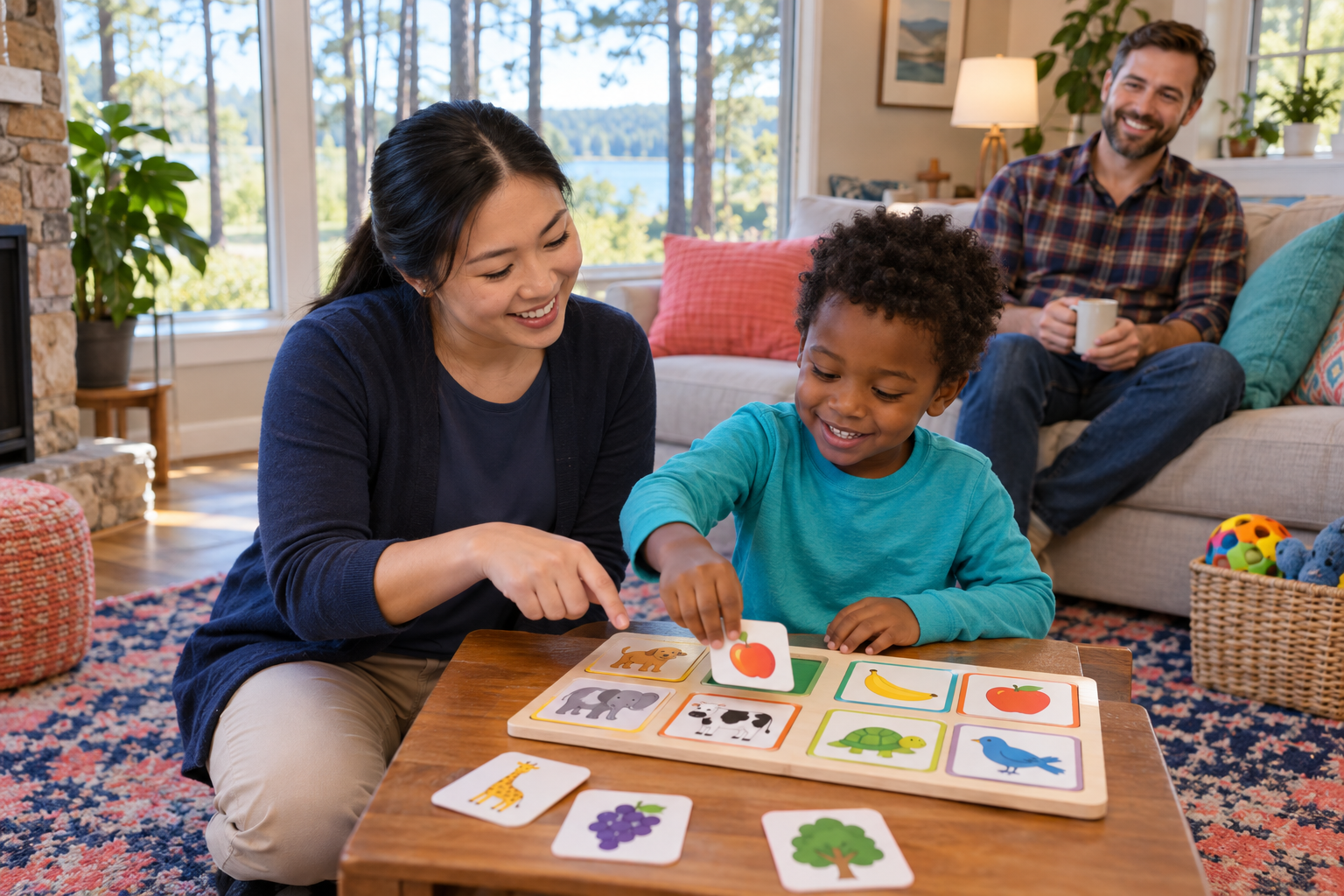
Clinic options do exist around Gainesville, but they fill up fast. That’s one reason more Hall County families are asking about in-home ABA. The therapist comes to you, and your child learns in the space where they already feel comfortable.
How Do Hall County Families Get an Autism Diagnosis?
It often starts at a regular checkup. Pediatricians are advised to do autism screening at 18 and 24 months, and a concern at that visit usually leads to a referral. From there, families may see a developmental pediatrician, a child psychologist or a specialty center in metro Atlanta.
Waitlists for those evaluations can be long. Don’t let that stall everything else. If your child is under three, you can contact Georgia’s early intervention program, Babies Can’t Wait, while you wait for a formal evaluation. It serves children from birth to age three and has no income test.
Many parents assume they need a doctor’s note first. They don’t. The CDC points out that for a free developmental evaluation, you do not need a referral or a diagnosis. You can simply call and ask.
If your child is three or older, reach out to Hall County Schools or Gainesville City Schools, depending on where you live. Districts must evaluate children they suspect have a disability, and preschool special education can start at age three. For more on early warning signs, see our guide to early signs of autism in toddlers.
Why Choose In-Home ABA Therapy in Gainesville, GA?
Time is a big one. A family in Lula or Clermont might spend over an hour each way reaching a clinic, several times a week. In-home ABA cuts that commute to zero, and siblings don’t have to be dragged along.
The bigger reason is what your child learns. Skills taught at home stick better at home. If your goal is a calmer bedtime, your RBT can practice the routine in your child’s actual bedroom, with their actual nightlight and stuffed animals.
It also gives your BCBA a clear look at daily life in your house. They’ll see the moments that are hardest for your family, not a tidy version in a therapy room. Plans built on real life tend to work better in real life.
That said, in-home ABA isn’t the right fit for every child. Some kids need peers around to practice social skills, and some homes are too busy for focused sessions. We’ll talk through the options honestly during your first call.
What Does an In-Home ABA Session Look Like?
Sessions usually last two to four hours, a few days a week, depending on your child’s plan. Your RBT arrives, says hello and spends the first few minutes connecting through play. Then learning gets woven into whatever’s happening.
Snack time turns into practice asking for crackers. A game of tag in the yard becomes a lesson in waiting and taking turns. Cleanup becomes practice following two-step directions, and your child mostly thinks they’re having a good time.
Your BCBA visits regularly to watch sessions, coach the RBT and update goals. At the end of most visits, the RBT will share what went well and one thing to try before next time. Over a few weeks, those small tips add up.
Parent involvement matters here. You don’t need to sit in on every minute, but being nearby for part of each session helps. Our guide to ABA parent coaching explains what that support looks like.
What Local Safety Issues Should Hall County Parents Know About?
Lake Lanier wraps around much of Hall County, and plenty of families live near coves, docks or neighborhood pools. That’s lovely in summer. It also matters for kids who wander, since drowning risk is much higher for autistic children than for their peers.
If your child tends to bolt or is drawn to water, tell your BCBA early. Safety goals, like stopping when called or staying with an adult, can be built right into the treatment plan. Your team can also help you think through door alarms, fence latches and swim lessons.
This isn’t meant to scare you. It’s one of those practical, local things that’s easy to plan for once it’s on your radar.
How Does Insurance Work for ABA in Hall County?
Coverage in Hall County follows Georgia rules, the same as anywhere else in the state. Many commercial plans must cover ABA for children under 21 under Georgia’s autism mandate. Self-funded employer plans, common with large local employers, may follow different rules, so always check.
Georgia Medicaid covers medically necessary ABA for members under 21, usually through a care management organization like Peach State Health Plan, CareSource or Amerigroup. Families whose income is too high for Medicaid may qualify through the Katie Beckett waiver. Our insurance page explains which plans we accept.
Prior authorization is standard for both commercial plans and Medicaid. That means the BCBA’s assessment and plan must be approved before regular sessions start. Our team handles the submission and keeps you posted.
What Should You Ask Before Choosing an ABA Provider Near Gainesville?
Start with the basics: who supervises the program, how often they visit and how they measure progress. Then ask the questions that affect your week. Can sessions fit around school pickup or a parent’s shift at the plant or hospital? What happens if your RBT gets sick or moves on?
Staff turnover is a real issue in ABA, and it can set a child back. It’s fair to ask how long RBTs tend to stay. Our article on why staff turnover matters in ABA explains what to listen for in the answer.
And ask how they handle hard moments. A good provider will describe calm, respectful approaches and will explain why. If anything sounds harsh or vague, keep looking.
What Other Support Is Available Around Gainesville?
ABA works best alongside other help. Many Hall County kids also get speech or occupational therapy, either privately or through school. Northeast Georgia Medical Center and local pediatric practices can point you toward therapists in the area.
Parent support counts too. Raising an autistic child can feel isolating, especially outside the metro. Our list of Georgia autism resources and support groups is a good starting point for finding other families who get it.
How Do You Get Started?
Skyward Spectrum’s in-home teams serve families across Georgia, and we’re growing into more communities north and east of Atlanta. Call with your address and we’ll confirm whether a team can reach you in Gainesville, Oakwood, Flowery Branch or nearby. You can also browse our Georgia ABA therapy locations to see where we work today.
When you’re ready, book a free consultation. Bring your diagnosis report and insurance card if you have them. If you don’t, that’s fine too, and we’ll tell you what’s needed.


