


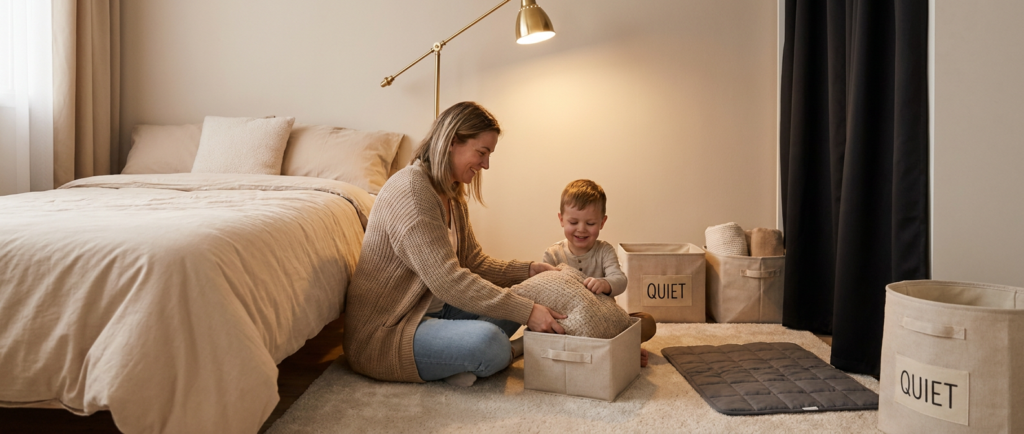
If you’re searching for autism sensory room ideas, it can be hard to tell which changes will actually help and which ones will just add cost and clutter. For many families, the goal is not to build a full sensory room. It is to make a regular bedroom feel calmer, safer, and easier for a child to use at bedtime and during moments of overwhelm.
A sensory-safe bedroom works best when it supports sleep, decompression, and predictability. That usually starts with removing the biggest sources of stress before buying new products. Instead of filling the room with equipment, focus on what makes the space easier to reset, easier to navigate, and less likely to add sensory overload.
What to Fix First Before Buying Anything
Start with the basics: light, sound, texture, clutter, and safety. Bright overhead bulbs, scratchy bedding, noisy vents or hallway sounds, overflowing shelves, and too many colors or patterns can all make a bedroom harder to settle into. In many cases, simplifying the room has more impact than adding more sensory tools.
Think about the job of the bedroom. If the room needs to support sleep and decompression, keep active play items somewhere else when possible. In a small home, rental, or shared room, that may simply mean creating one calmer corner with softer lighting, simpler storage, and fewer loose items visible at night.
Age matters here. Younger children may need anchored furniture, fewer climbable items, and very simple calming choices. School-age children may benefit from labeled bins, a clear bedtime routine, and easier access to the things they use every night. Teens often do better with subtler supports that protect privacy and do not feel too childish, such as softer textures, better blackout coverage, or quieter organization systems.
RESET Room Framework
R — Reduce competing input
Look first for the inputs that are fighting for your child’s attention: harsh light, visual clutter, loud noise, bold patterns, strong scents, or uncomfortable fabrics. The first improvement is often removing or softening one of these triggers, not buying something new.
E — Evaluate the child’s regulation pattern
Match the room to the problem you are trying to solve. Does your child need help winding down at bedtime, decompressing after school, moving their body more safely, or transitioning into the room with less resistance? Observation matters more than assumptions.
S — Select supports by function, not trend
Choose supports based on what the room needs to do. That might mean blackout curtains instead of decorative lights, softer sheets instead of new toys, labeled storage instead of more furniture, or white noise instead of multiple sound machines. One defined retreat spot or one simple body-based support may help more than a long shopping list.
E — Establish sleep-safe boundaries
A bedroom should still function as a sleep-safe, easy-to-reset space. Keep highly activating items separate from calming supports when you can. Favor soft, washable materials, fixed or rounded furniture, and age-appropriate items. In a shared room, focus on creating one reliable calm zone rather than trying to control every part of the space.
T — Test one change at a time
Give each change a week or two before deciding whether it helps. Watch for bedtime resistance, settling time, night waking, avoidance of certain textures, meltdowns in the room, or safer transitions. Testing one change at a time reduces wasted spending and gives families and providers such as Skyward Spectrum clearer information if more support is needed.
Bedroom Sensory-Safety Budget Audit
Before you buy anything, walk through the room in three passes:
Pass 1 — Safety & sleep baseline
Check that furniture is anchored, breakable items are removed, and the room is easy to move through at night. Ask whether the bedroom is being asked to do too many jobs at once. If sleep and decompression are hard, start by protecting those first.
Pass 2 — Sensory load check
Look at lighting, window coverage, noise, echo, bedding, pajamas, scent, and visual clutter. Notice what your child avoids, what seems to escalate them, and what makes the room feel busy even before bedtime starts.
Pass 3 — Regulation supports
Add only a few supports on purpose: one calming or retreat area, one safe movement substitute if needed, one tactile item that actually feels regulating, and one transition aid such as labels or a bedtime visual.
Budget + observation columns
As you work through changes, sort each one into three groups: free, under $25, or save for later. Next to each change, write down the problem it is meant to help, such as trouble settling, avoiding bedding, or unsafe climbing. Add one more note for watch-outs like overstimulation, sleep disruption, cleaning burden, or safety concerns. This keeps the audit practical and helps you see whether a purchase is worth it.
FAQ
What should be in a sensory-safe bedroom for a child with autism?
The essentials are usually calming, safety, and predictability. That may include softer lighting, comfortable bedding, simpler storage, fewer competing visuals, and one or two regulation supports that match the child’s needs. A sensory-safe bedroom does not need to be filled with equipment.
How can I make a sensory-friendly bedroom on a budget?
Start with free fixes first: remove clutter, reduce bright light, separate sleep from active play, and simplify what is visible. Then make low-cost swaps like softer fabrics, blackout curtains, labeled bins, or white noise. Save higher-cost items for later if you are sure they solve a specific problem.
What lighting works best in an autism-friendly bedroom?
In most bedrooms, softer and more adjustable light works better than harsh overhead lighting. Blackout coverage can help with sleep, and warm, steady light is often easier to tolerate than flashing or color-changing effects. The best choice depends on how your child responds to brightness, shadows, and visual stimulation.
How do I reduce sensory overload in a child’s bedroom?
Reduce the number of competing inputs. That may mean less clutter, fewer bold patterns, softer textures, better noise control, and a clearer place for each item. If severe sleep disruption, self-injury, elopement, or unsafe movement continues even after room changes, it may be time to talk with your child’s care team.


