


A car park. A crowded store. The front yard, for just a few seconds while you carried groceries inside, is all it takes. If your child has bolted from a safe area even once, you know that specific fear.
It doesn’t fade quickly, sometimes not for years. Autism elopement is one of the more frightening realities many families describe. It deserves to be treated with real seriousness, not folded into general behavior advice.
What Elopement Is and Why It Happens
Elopement means running or wandering away from a safe, supervised area, and it’s usually function-driven rather than random. A child might be escaping an overwhelming sensory environment, or seeking a specific sensory input. Sometimes it’s about pursuing something they want: a favorite spot, an open door, water.
This isn’t a rare concern either. According to the American Academy of Pediatrics, nearly half of children with autism attempt to wander or bolt at some point. That’s exactly why safety planning matters as much as any other part of a treatment plan. It shouldn’t be an afterthought once something has already gone wrong.
Common Scenarios Families Describe
Certain settings come up again and again when families describe elopement incidents. A grocery store checkout line, where a moment of distraction is all it takes. A family gathering with an unfamiliar house and unfamiliar exits. A school transition moment, between the classroom and the bus line, where supervision briefly thins out.
Water draws a disproportionate share of concern, and for good reason. Many elopement incidents end at a nearby pool, pond, or retention area, since water is often specifically sought out rather than incidental. Any family safety plan worth building takes that pattern seriously rather than treating water as just one hazard among many.
How ABA Builds Safety Skills
Rather than only reacting after an attempt, ABA programs work proactively to teach functional alternatives. Functional communication training might teach a child to request a break, or signal “I need to leave,” instead of bolting. Safety-skill teaching can also include practicing a “wait” response at doors or curbs.
This gets paired consistently with reinforcement, so stopping and waiting becomes a genuinely learned skill, not something a child is simply expected to know. A BCBA typically starts this teaching in a low-stress setting before generalizing it to busier, more distracting environments. A skill that only works in a quiet room isn’t the skill a family actually needs.
Some programs also build in specific water-safety responses, given how often water is involved in serious incidents. That might mean teaching a child to respond immediately to their name near any body of water. Swim safety instruction outside of ABA sessions themselves matters just as much. Neither replaces constant supervision, but both add real layers of protection.
Building a Family Safety Plan Step by Step
A written safety plan sounds formal, but it doesn’t need to be complicated to be useful. Start with an honest list of every place your child has ever attempted to leave, or shown interest in leaving toward. That list tells you exactly where to focus door alarms, locks, or extra supervision first.
Next, identify every adult who regularly supervises your child, from grandparents to a school aide. Make sure each one knows the specific risk and the specific response. A plan only one parent knows about isn’t much of a plan at all. Reviewing it together every few months, especially after any near-miss, keeps it current as your child grows and circumstances change.
Practical Safety Steps Families Can Take Now
Therapy builds skills over time, but a few practical layers of protection matter right now too. Door and window alarms give an early warning, and ID bracelets, GPS trackers, or a card in a backpack can help if wandering happens anyway. Letting neighbors know your child may wander adds one more layer of eyes that isn’t just yours.
None of this replaces therapy, it supplements it. Most families find real relief in having both layers in place at once.
Working With First Responders and Your Community
Many local police and fire departments keep a voluntary registry for residents who may wander or have trouble communicating during an emergency. Registering your child ahead of time, with a recent photo and a few sensory notes, can meaningfully speed up a response if the worst happens. It’s a five-minute form that most families never think to fill out until after a scare.
Some families also introduce their child to a local officer or firefighter during a calm, low-stakes visit, well before any emergency. A uniform and a stranger’s voice can be overwhelming during an actual crisis. A little prior familiarity sometimes makes a real difference in how a child responds in the moment.
Talking to Siblings and Extended Family
Siblings often end up as informal lookouts, whether or not a parent ever asked them to take on that role. That’s a lot to place on a child, and it deserves an honest, age-appropriate conversation rather than silent expectation. A sibling should know the plan, but shouldn’t feel solely responsible for their brother or sister’s safety.
Extended family and regular babysitters need the same clarity, not a watered-down version because they’re just visiting. A grandparent who doesn’t know a specific door needs to stay locked isn’t equipped to actually help. The same goes for one who doesn’t know a specific fence gap gets checked every visit. A short, written reminder, even a simple note taped inside a door, closes that gap without requiring a long conversation every single time.
When a Wandering Incident Happens Anyway
Even with a strong plan in place, an incident can still happen, and it doesn’t mean the plan failed. Call for help immediately rather than searching alone for more than a few minutes first. Time matters enormously in these situations, and involving neighbors and first responders early tends to shorten how long a child is missing.
After an incident, resist the urge to treat it purely as a discipline issue once your child is safe. A calmer, more useful next step is reviewing what happened with your BCBA. Together you can look at what preceded the attempt and adjust the safety plan and the skill-teaching goals accordingly.
Frequently Asked Questions
At what age does elopement risk usually peak?
Risk varies by child, but many families report the highest concern between ages four and eight, when mobility outpaces judgment and communication. Risk can persist well into the teen years for some children, so safety planning shouldn’t stop once a child gets older.
Does elopement mean my child is trying to run away from me?
Almost never. Elopement is usually about pursuing something specific or escaping something overwhelming, not about a child rejecting a parent or caregiver. Understanding the function behind it, rather than the emotional read on it, is what actually helps.
Will my child outgrow this on their own?
Some children do reduce wandering behavior naturally as communication and safety awareness improve. Others need direct, deliberate teaching to get there. Either way, active safety measures should stay in place until a BCBA and family agree the risk has genuinely dropped.
Should I tell my child’s school about a wandering history?
Yes, and the earlier the better. A school team can build supervision plans, door alarms, or a buddy system around a known risk. That’s far more effective than reacting after a close call on campus. This is worth raising directly at any IEP or 504 meeting.
Are GPS trackers actually reliable for this?
They’re a helpful layer, not a complete solution. Battery life, signal range, and a child’s willingness to keep a device on all vary quite a bit. Most families treat a tracker as one part of a broader plan, not the whole plan itself.
What should be in a “grab and go” folder for emergencies?
A recent photo, a brief description of communication style and sensory triggers, and a list of favorite calming items all belong in it. So does any medical information a first responder would need. Keeping it by the door, and updating it every few months, means it’s ready the moment it’s needed rather than assembled under panic.
Can ABA really teach a child not to bolt at all?
No responsible provider promises elimination of all risk, and it’s important to be honest about that upfront. What ABA can realistically build is a stronger set of alternatives: better communication, better tolerance for waiting, and a faster response to their name. Together, those meaningfully reduce risk over time.
Concerned About Elopement or Wandering?
If your family has experienced an elopement incident, or you’re worried about the risk, reach out to Skyward Spectrum. Safety planning can start right alongside your child’s ABA program.
Meta description: Autism elopement and wandering safety: why it happens and how ABA therapy builds the skills that keep children with autism safer. (129 characters)
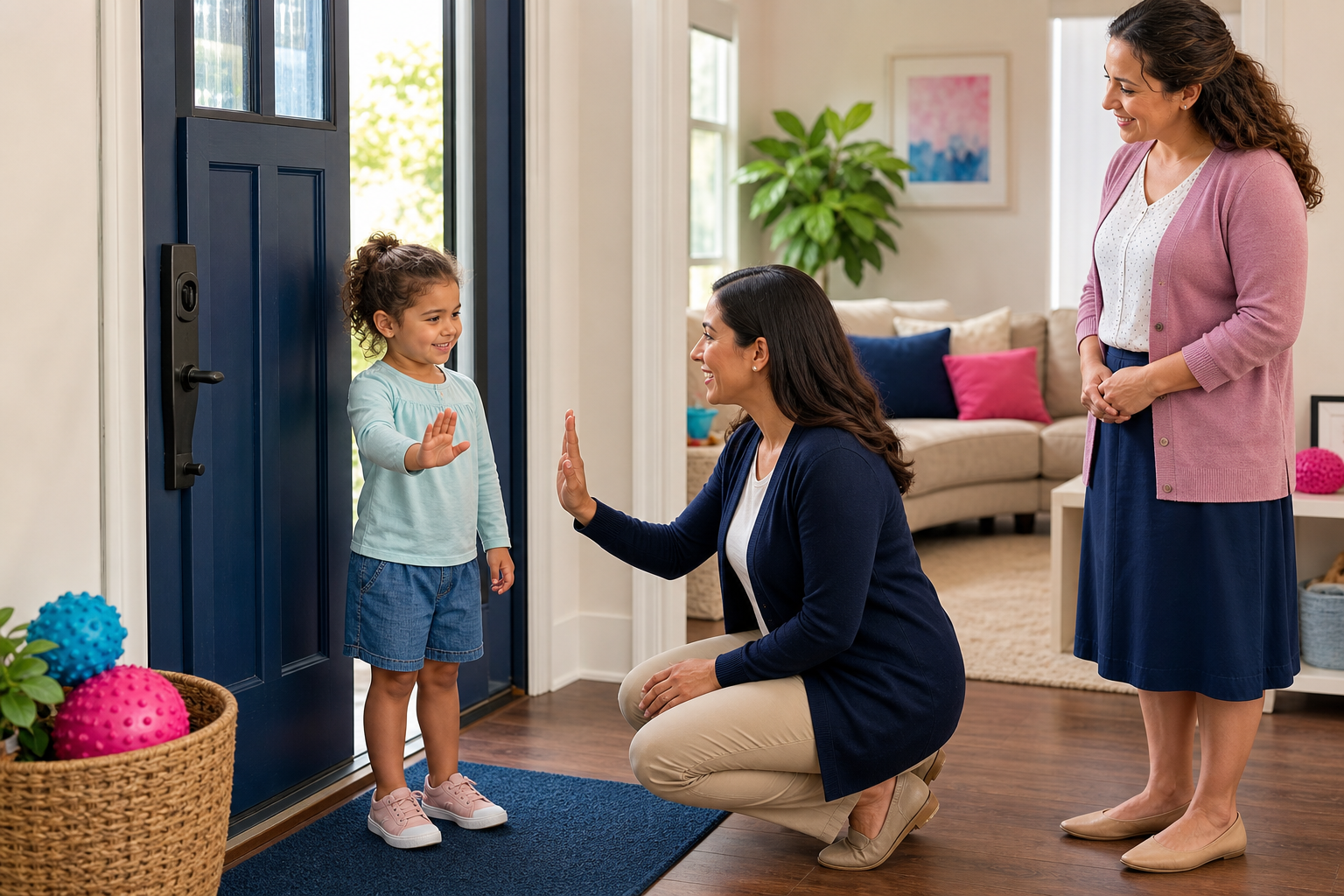
Image ALT text: Parent supervising a child with autism safely in a home yard
AI image generation prompt: A natural-light photo of a parent and child together in a fenced backyard, the parent gently holding the child’s hand, calm and attentive body language, documentary photography style, no text overlay.


