


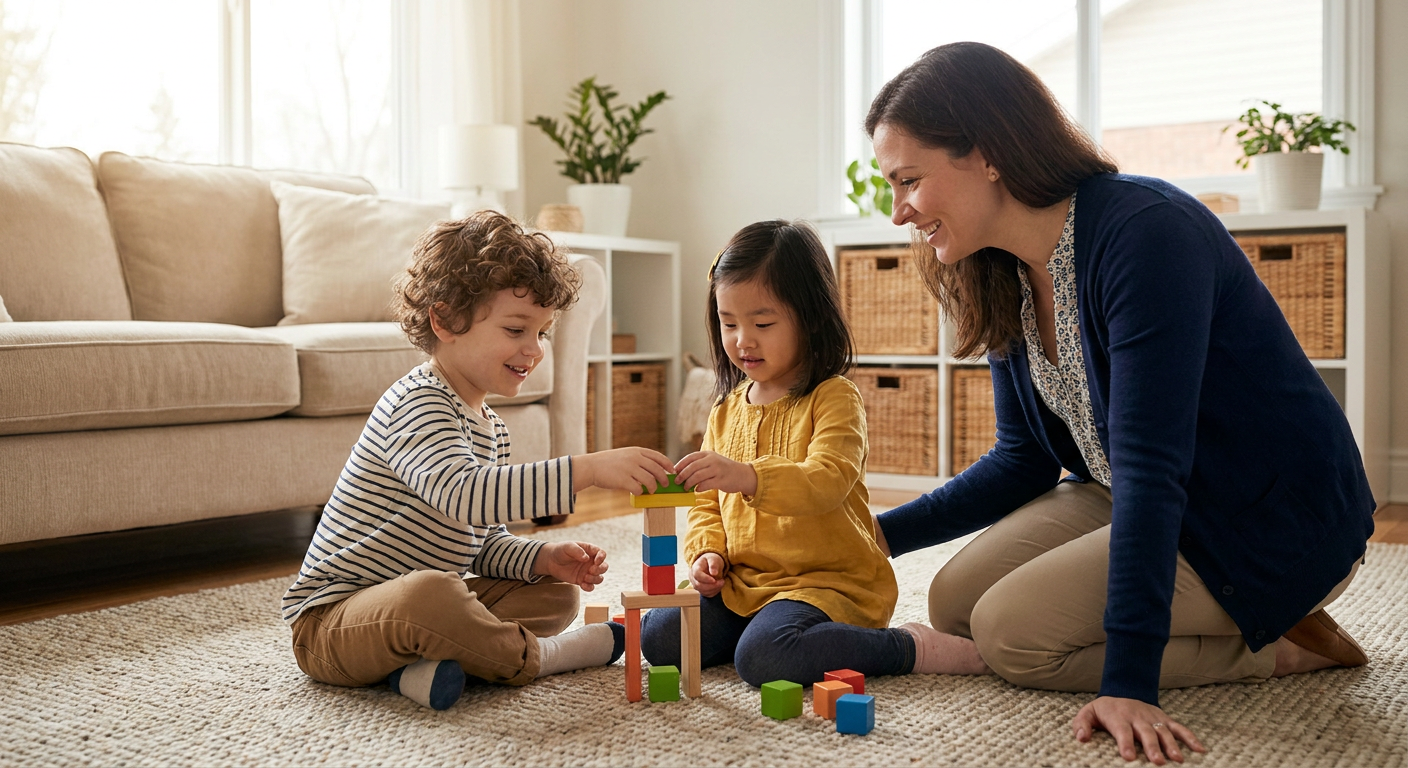
If your child wants to play with other kids but gets left out, walks away, or melts down when the game changes, you are not overreacting by looking for help. For many Georgia families, social skills ABA therapy becomes part of the conversation when a child is struggling with cooperative play, turn-taking, recess routines, sibling play, birthday parties, or the first steps of conversation.
ABA therapy can support social skills development by teaching specific behaviors in small, practical steps and then helping children use those skills in real life. This article explains what social skills challenges ABA can help with, what progress may realistically look like, and how families in Georgia can judge which type of support may fit their child best. Families in Augusta and across the state often need more than a general explanation. They need clear guidance about everyday carryover, what questions to ask, and how to recognize a program that is focused on functional change rather than practice that only works inside a session.
Major medical resources such as Cleveland Clinic’s overview of applied behavior analysis and Children’s Hospital of Philadelphia’s explanation of ABA for children with autism describe ABA as a structured approach that teaches skills in measurable steps. When social development is the goal, the most helpful programs apply that structure to the moments that matter most to families.
Which Social Skills Challenges Can ABA Therapy Help With?
In practical terms, social skills are the small building blocks that help a child join, stay in, and recover during interaction with other people. That can include noticing another person’s actions, waiting for a turn, sharing attention, responding to a simple question, or staying with a game long enough for it to feel enjoyable instead of overwhelming.
For children with autism, these challenges often show up in ordinary moments rather than formal “social situations.” A child may want to play but not know how to enter a game. Another may talk about a favorite topic without noticing that the other child is confused or bored. Some children struggle most with joint attention, meaning it is hard to share focus on a toy, activity, or person. Others have difficulty reading basic cues such as when to stop, wait, look, respond, or change direction.
ABA therapy may help children build skills related to cooperative play, turn-taking and waiting, joint attention, starting and maintaining simple conversations, reading basic social cues, entering peer activities, and coping with losing, frustration, or awkward social mistakes. For younger children, goals often focus on play foundations such as sharing attention, imitating actions, taking short turns, and staying regulated during simple group activities. For school-aged children, goals may shift toward joining peer routines, handling flexible rules, following the back-and-forth of conversation, and recovering when interaction does not go as planned.
The important clinical guardrail is that not every child needs the same social-skills targets. A good plan does not use vague goals like “be more social.” It identifies the specific barrier that is getting in the way of connection and teaches from there.
How ABA Therapy Builds Social Skills in Real Life
ABA therapy usually starts with assessment. The team looks at where social interaction is breaking down, where the child is already successful, and which settings matter most right now. For one child, the biggest stuck point may be entering a game at recess. For another, it may be staying with sibling play for more than a minute without grabbing toys or shutting down.
From there, the team sets individualized goals and teaches the skill in manageable steps. That may involve modeling a short phrase such as “Can I play too?” reinforcing successful attempts, using role play to practice a likely situation, building in natural environment teaching during daily routines, or using social stories to prepare for situations that tend to create confusion or anxiety. Research suggests structured teaching can help some children build social communication, play, and adaptive skills when goals are individualized and progress is monitored over time.
The strongest social-skills work does not stop at table work or therapist-led drills. It moves into meaningful situations. A child might practice handing over a toy and waiting for it back during play with a sibling. Another might work on answering a peer’s question during a snack break, or on recovering after losing a simple board game without leaving the activity entirely. In-home, school, and community settings can all matter because social demands change from place to place.
Age and developmental level matter here too. Younger children may need very structured play routines with short, predictable turns. School-aged children may need more support with flexible interaction, conversation flow, reading peer reactions, and understanding unwritten rules during games or group activities. Progress is rarely fast or perfectly linear. A child may do well with one familiar cousin and still struggle at a birthday party. That does not always mean therapy is failing. It often means the skill needs more practice across people, settings, and levels of unpredictability.
The PEER Carryover Map
P – Pinpoint the stuck moment
Before choosing support, it helps to name the exact social challenge. “Trouble making friends” can mean many different things. The real barrier might be difficulty entering play, taking turns, sharing attention, asking a simple question, tolerating losing, or staying regulated when another child changes the rules. The clearer the stuck moment is, the easier it becomes to choose the right goal and teaching approach.
E – Establish the skill in the right setting
The setting should match the skill being taught. If the challenge shows up during home routines, one-to-one support in the home may make sense. If the main issue is classroom carryover, school collaboration may matter more. If the child needs practice with unfamiliar peers, coached community practice or group opportunities may be more useful. There is no one best model for every child. Fit depends on the child’s current needs.
E – Expand practice across people and places
A child who can take turns with a therapist but not with a sibling still needs more carryover. Families should look for a plan that extends across home routines, siblings, cousins, neighborhood peers, school settings, and community outings when appropriate. The goal is not session-only success. The goal is broader use of the skill in daily life.
R – Review real-life proof
Meaningful progress usually looks practical before it looks polished. A child may start play more easily, have fewer conflicts during games, respond to peers more often, or recover faster after awkward moments. Those changes matter because they improve daily functioning. Parents should look for functional proof, not perfect behavior or guaranteed outcomes.
How Georgia Families Can Choose the Right Social-Skills Support
For Georgia families, the right support depends on both the child’s needs and the realities of everyday life. One-to-one in-home ABA may be especially useful when the hardest social moments happen during sibling play, neighborhood playdates, or home routines. Clinic-based programming may offer more structure and access to peers in some programs. Community-based sessions can help when the goal is using skills in parks, stores, libraries, or other public settings. Social-skills groups may be useful for some children, especially when they already have basic readiness for turn-taking, waiting, and responding in a group.
When you speak with a provider, ask specific questions. What social challenges are being targeted right now? How will goals be measured? How will the team help skills carry into home, school, and community life? Is caregiver coaching included, or are parents expected to figure out carryover on their own? How is BCBA oversight handled? If progress stalls, what changes will be made to the plan?
Georgia families may also need to think about travel distance, scheduling, and service format. What works well in Augusta may not be available in the same way in every part of the state. If in-home care is offered, ask how the team supports carryover in daily routines. If school or community coordination is important, ask how often that actually happens in practice. If insurance is part of the decision, ask what help is available with verifying participation in plans such as Medicaid, Peachstate, Amerigroup, Caresource, Anthem/BCBS, Aetna, or with questions related to Katie Beckett navigation. Good providers should explain the process clearly without making coverage promises before verification.
Realistic progress may look like a child joining family games more often, staying with peer play for longer stretches, tolerating short waits with less frustration, or bouncing back more quickly after mistakes. Families often do best with providers who combine clinical quality, clear communication, and support that reaches beyond the therapy hour into everyday life.
Georgia Social Skills Program Fit Grid
Parents can use a simple comparison grid before intake calls so the conversation stays focused on fit rather than general promises.
| What to compare | One-to-one in-home ABA | Clinic-based programming | Community-based sessions | Social-skills group work | Best fit for this child right now |
| Target social challenge | Home routines, sibling play, daily transitions | Structured practice in a consistent setting | Real-world interaction in public settings | Peer participation with shared activities | Which setting matches the hardest moment? |
| Developmental fit for children | Helpful when a child needs support in familiar routines | Helpful when structure and predictability improve learning | Helpful when a child is ready for guided carryover | Helpful when group readiness is already emerging | What can the child tolerate and use successfully now? |
| Peer-practice opportunities | Limited unless arranged intentionally | May vary by program | Natural but less predictable | Built around peer interaction | Where will meaningful peer practice actually happen? |
| Parent coaching built in | Often strongest in this format | Varies by provider | Should be included for carryover | Often lighter unless paired with coaching | Will parents be shown what to do between sessions? |
| School coordination | Possible if the provider offers it | Varies | Often useful when goals involve community and school-like skills | Usually indirect | How will skills transfer beyond therapy? |
| Community carryover plan | Can start at home, then expand | May need separate generalization planning | Central feature if done well | Helpful but may not be enough alone | Is there a plan beyond session-only success? |
| BCBA oversight | Ask how often goals are reviewed and updated | Ask who designs and monitors social goals | Ask how real-world practice is supervised | Ask how group progress is measured | Who is responsible for adjusting the plan? |
| Progress measurement | Daily data plus parent observations | Session data plus structured probes | Real-life performance matters most | Group participation and carryover should be tracked | Will progress be measured in functional ways? |
| Schedule intensity | Flexible but depends on family routine | May be easier to standardize | Can be harder to schedule consistently | Usually lower intensity | What amount of practice is realistic for the family? |
| Waitlist/travel burden | May reduce travel if available locally | May require routine travel | Travel depends on location of practice | Group availability may be limited | What is manageable across Georgia access realities? |
| Insurance/funding fit | Verify provider participation and authorization steps | Verify the same questions here | Ask whether community work is covered and how it is documented | Ask whether group services are covered or self-pay | What financial questions need answers before starting? |
For Georgia families, add three practical questions to the grid: Does this provider serve our area consistently? Is caregiver coaching part of the plan? What exactly should we ask about Medicaid or commercial insurance participation before intake? This works best as a short comparison tool you can bring to provider calls and update as you learn more.
FAQ
What social skills can ABA therapy help children with autism build?
ABA therapy may help with cooperative play, turn-taking, waiting, joint attention, conversation starts, responding to peers, reading basic social cues, and coping with frustration during interaction. The right goals depend on the child’s developmental stage and the specific situations where social connection is breaking down.
Can ABA therapy help with cooperative play and peer interaction?
Yes, it can help some children build the smaller skills that make cooperative play possible, such as joining an activity, sharing attention, waiting for a turn, and staying engaged long enough for play to continue. Progress may show up at home, at school, or in community settings, but it often takes guided practice across more than one environment.
How does ABA therapy improve communication as part of social development?
Social interaction depends on communication. A child may need help requesting, responding, commenting, asking simple questions, or noticing when another person is trying to interact. When those communication skills improve, peer interaction often becomes easier because the child has more tools to participate in the back-and-forth of play and conversation.
What is the difference between in-home, clinic-based, community-based, and group support for social skills?
The main difference is where and how the child practices. In-home care may be best for routines, sibling interaction, and parent coaching. Clinic-based care may offer structure. Community-based care helps with real-world carryover. Group support can help when a child is ready to practice with peers. The best option depends on the stuck moment being targeted, not on a one-size-fits-all model.
How can parents reinforce social skills learned in ABA therapy at home?
Parents can help most by practicing the same skill in short, realistic moments instead of turning home into constant therapy. That may mean prompting a simple play entry, pausing for a turn, praising a successful response, or helping a child recover after frustration. Consistency, coaching, and noticing small wins usually matter more than making every interaction perfect.
Are there ABA therapy options in Georgia that support social-skills development?
Yes. Families in Georgia can look for providers that offer individualized social-skills goals, caregiver coaching, and a clear carryover plan across home, school, and community life. For families who want support that is clinically grounded and centered on everyday use of skills, providers such as Skyward Spectrum may be part of that conversation, especially when in-home support and family guidance are important.


