


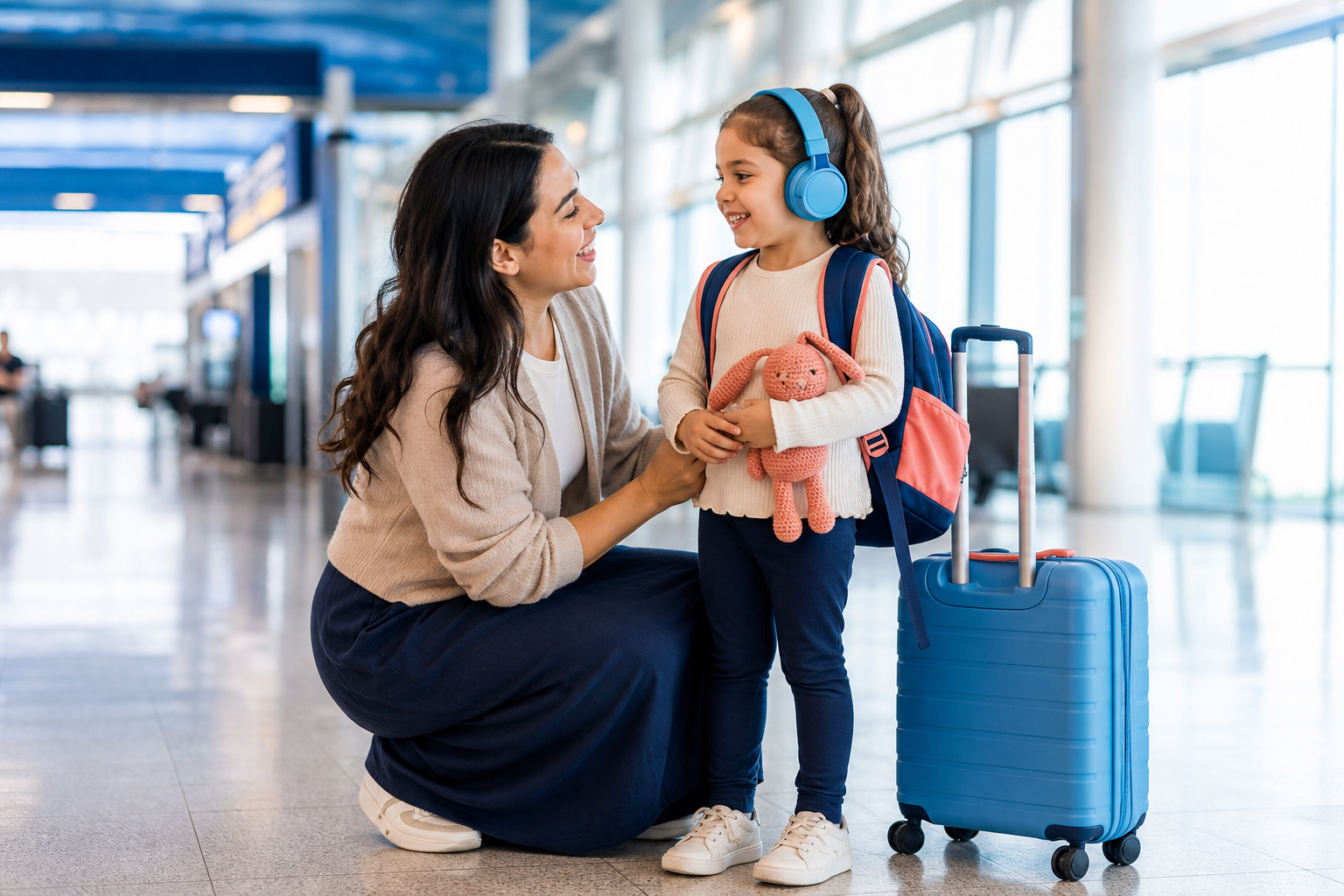
Travel can feel like a lot when your child depends on familiar routines, predictable transitions, or extra support in busy places. The good news is that you do not need a perfect trip plan. In most cases, traveling with a child with autism feels more manageable when you prepare for the hardest moments, bring a few supports that truly help, and decide ahead of time what you can simplify if the day starts to unravel.
Quick Summary
- Figure out which part of the trip is most likely to be hard.
- Pack for regulation, not just entertainment.
- Protect food, rest, and transition routines where you can.
- Choose a backup plan before you leave home.
- Let go of nonessential expectations if your child needs a reset.
Where Travel Usually Gets Hard for Children With Autism
For many children with autism, travel gets harder during waiting, loud environments, unfamiliar bathrooms, food changes, sleep disruptions, and one transition after another. Those moments often reflect stress, communication needs, or sensory overload, not bad behavior.
That is why it helps to think less about getting through the whole trip perfectly and more about spotting the moments that tend to be hardest for your child. If transitions are already a challenge, this guide on helping children with autism manage transitions and unexpected changes gives more context. If your child uses repetitive sounds or movements to stay regulated, this article on what stimming can look like and how parents can respond may help you notice stress cues earlier.
The READY Travel Pressure Map
R: Rank the pressure points first
Start by asking yourself one simple question: Which part of this trip is most likely to go off track? For one child, it may be airport waiting. For another, it may be getting back into the car after a stop or settling into a hotel room at bedtime.
You do not have to solve every possible travel challenge at once. In fact, most families do better when they focus on one or two high-stress moments first. That gives you a clearer plan and keeps the preparation from becoming overwhelming.
E: Equip the regulation anchors
Next, think about what already helps your child stay steady. That might be headphones, preferred snacks, a visual schedule, a comfort item, movement breaks, a tablet with one familiar activity, or a short script that explains what comes next.
The goal is not to bring everything. It is to bring the supports that actually make a difference when your child is tired, overstimulated, or being asked to handle something unfamiliar.
A: Arrange the trip for recoverability
A lower-stress trip is usually built around recovery, not just efficiency. If possible, choose timing, stops, seating, and activity levels based on what protects your child’s energy.
A few examples:
- For flights: plan for long waits, security lines, and boarding transitions.
- For car rides: build in movement breaks and keep snacks and comfort items easy to reach.
- For hotel stays: make the first hour after arrival calm and low demand.
You do not need an ideal schedule. You need one that gives your child room to recover.
D: Decide the backup move before leaving
One of the most helpful things you can do before a trip is decide what changes first if stress rises. Maybe that means skipping an extra stop, delaying an activity, taking a quiet break in the car, or treating the first evening at the hotel as recovery time only.
When families already know the backup move, they do not have to make every decision in the middle of a hard moment.
Y: Yield the nonessential expectation
Travel rarely goes exactly as planned, and that does not mean the trip failed. If your child needs more breaks, fewer activities, or a shorter outing than you imagined, the day can still be a success.
Letting go of nonessential expectations often lowers pressure for everyone. If public overwhelm is part of the challenge, you may also find it helpful to read about ABA-informed strategies for handling meltdowns in public.
What to Prepare 24 to 72 Hours Before You Leave
A little preparation goes a long way, especially when it is simple and familiar. In the day or two before your trip, try previewing what travel day will look like in short, manageable ways. That could mean using a visual schedule, looking at photos of the airport or hotel, practicing a short wait, or reading a basic social story.
For children, short repetition usually works better than one long explanation. A few quick previews can feel much easier to absorb.
It also helps to pack through a regulation lens. Along with the usual travel basics, think about the items your child relies on when things feel off. That might include:
- sensory tools
- medications
- wipes and backup clothes
- comfort items
- sleep supports
- preferred foods or familiar snacks
- any safety items your family regularly uses
If a visual plan helps your child with transitions, this article on building a visual schedule for calmer routines is a good place to start. And if smaller practice outings help before a bigger trip, these tips for successful community trips with children with autism can give you ideas to borrow.
What to Do When Travel Day Starts Going Sideways
Even with preparation, there may still be a moment when your child is overwhelmed, exhausted, or simply done. When that happens, it helps to keep your response as simple as possible:
- Notice the early signs, such as pacing, covering ears, refusal, shutting down, or sudden irritability.
- Reduce immediate demands instead of adding more instructions.
- Move to the safest calmer option available.
- Use familiar supports like snacks, headphones, movement, or a comfort item.
- Simplify the next step so your child only has to do one manageable thing.
This approach can help during a long wait, a noisy gate, bathroom stress, hunger after delays, or the crash that sometimes happens after children have been holding it together for too long.
If your family wants more support around public regulation or transitions, you can also explore practical guidance for public meltdowns and ways to make unexpected changes easier on children with autism.
Travel-Day Pressure Point Planner
Use this quick planner 24 to 72 hours before your trip, then keep a simplified version on your phone for travel day.
- Leaving home
- Likely trigger: stepping away from routine
- Support to prepare: visual countdown, comfort item
- Backup move: pause, reset, and restart with one simple step
- Ride to the airport or start of the drive
- Likely trigger: sitting, waiting, limited movement
- Support to prepare: snacks, headphones, low-demand activity
- Backup move: add a short movement break
- Security or the first major wait
- Likely trigger: noise and unpredictability
- Support to prepare: simple script, visual cue
- Backup move: step aside and lower demands
- Boarding or getting back in the car after a stop
- Likely trigger: another transition
- Support to prepare: first-then language, familiar item
- Backup move: give extra transition time
- Snack and bathroom timing
- Likely trigger: hunger or discomfort
- Support to prepare: planned stops, preferred foods, familiar bathroom routine
- Backup move: adjust timing sooner than planned
- Hotel check-in and bedtime
- Likely trigger: fatigue and unfamiliar space
- Support to prepare: sleep anchors, quiet room setup
- Backup move: drop nonessential evening plans
FAQ
How can I prepare my child with autism for travel?
Preview the trip in short, simple ways and focus on the hardest moments first. Visual supports, practice, and familiar regulation tools often help more than long explanations.
What should I pack when traveling with a child with autism?
Think beyond standard travel items and pack for regulation too. Preferred snacks, sensory tools, comfort items, medications, backup clothes, and sleep supports are often the most helpful.
What should I do if my child becomes overwhelmed during travel?
Lower demands, move to a calmer option, and use the backup plan you chose before leaving. The goal is to help your child recover, not push through at all costs.
Are there Georgia travel resources that may help families prepare?
If you are looking for local support, Georgia autism resources for families is a helpful place to start.
If your family wants help building routines, transition support, and practical strategies that carry over into real life, Skyward Spectrum provides in-home ABA therapy for children with autism across Georgia.


