


If you’ve been searching for traveling with a child with autism tips, you’re probably not looking for a perfect vacation plan. You’re looking for ways to make the trip feel more manageable. For many families, the hardest parts are the ones that feel least predictable: long waits, loud spaces, unfamiliar bathrooms, sleep disruption, hunger, and quick changes in routine.
The goal is not to control every part of travel. It’s to reduce stress where you can, protect the supports your child relies on most, and give your family more room to recover when the day doesn’t go exactly as planned.
This guide is designed for families getting ready for flights, long car rides, and hotel stays with a child with autism. With an ABA-informed approach, you can think ahead about what to prepare, what matters most for your child, and how to adjust without feeling like the whole trip is falling apart.
Why Travel Can Feel So Hard for Children With Autism
Travel combines many of the things that already take extra effort for children with autism: transitions, waiting, crowded spaces, new sounds, schedule changes, different foods, and an unfamiliar place to sleep. A child who usually does well at home or school may still struggle when several of those demands pile up at once.
It helps to treat travel behavior as communication, not “bad behavior.” Repetitive questions, refusal, covering ears, shutting down, getting unusually active, or asking for the same thing again and again may all be signs that your child is working hard to manage stress.
Younger children often need support that is concrete and immediate, like simple language, familiar routines, and co-regulation from an adult. Older children may do better with collaborative planning, privacy-respecting support, and clear scripts for asking for a break or extra help. If transitions are a major stress point for your child, this guide on managing transitions and unexpected changes offers a broader look at that challenge without repeating it all here.
The ROAM Travel Fit Map
R: Protect the routine anchors
Before you worry about every detail of the trip, think about the routines that matter most for your child’s regulation. That might include sleep timing, preferred foods, bathroom habits, transition warnings, movement breaks, familiar calming items, or protected downtime.
The goal is not to recreate home exactly. It’s to protect the routines that make the biggest difference. For a younger child, that may mean keeping bedtime steps in the same order and bringing the same blanket, cup, or bedtime book. For an older child, it may mean keeping headphones within reach, holding onto quiet time after travel, and agreeing in advance about which parts of the schedule can flex.
O: Watch for overload signals
It also helps to name your child’s earliest signs of stress before the trip begins. These may include pacing, covering ears, repetitive requests, increased stimming, refusal, shutting down, bolting risk, or a sudden change in mood.
When you know those signals, you can respond earlier, when support is often more effective. If you want a better sense of how repetitive behaviors can help with regulation, this guide to stimming and how parents can respond gives helpful context.
A: Adapt the plan
This is where ABA-informed planning becomes practical. For each part of the trip, ask yourself: What should I preview? What needs to stay within reach? What can be shortened? What can be skipped if stress rises? What is my backup option?
That might mean choosing a direct flight instead of a cheaper connection, stopping earlier on a road trip than you first planned, or deciding ahead of time that the first evening at the hotel is only for settling in. Good planning is not rigid planning. It gives you a way to make the day easier when you need to.
M: Leave margin for recovery
Many families focus on getting through the airport, the drive, or hotel check-in, but not enough on what happens after. Recovery time matters. A child may hold it together during a hard transition and then unravel once they reach the gate, the hotel room, or the car.
Build in low-demand time after the most stressful parts of the day. That may look like quiet screen time, a snack, dimmer lights, movement, or simply fewer expectations for the next hour. If unexpected changes tend to hit your child hard, this article on helping children handle transitions and changes can support that part of your planning too.
Before You Book and Before You Leave
Travel support starts before travel day. If you can, choose direct routes, realistic timing, and a trip length your child can tolerate. Think through the hotel setup, food access, sleep arrangements, and how much activity your family can reasonably handle each day.
Previewing often makes a big difference. You might use a short social story, photos of the airport or hotel, a simple visual schedule, or a practice version of part of the trip. Younger children often benefit from short, repeated rehearsal more than one long explanation. Older children may want to help choose coping tools, plan breaks, or say what kind of support they want from adults. If visual supports work well for your family, this visual schedule guide may give you ideas you can adapt for travel.
When you pack, think about regulation before convenience. That usually means snacks, water, medications, charging cords, extra clothes, wipes, comfort items, sensory tools, low-demand activities, and sleep supports. It also helps to think through safety ahead of time, including identification information, wandering concerns, bathroom needs, and sibling logistics. Planning lowers stress, but it won’t remove every challenge, so try to build a plan that feels flexible and realistic.
Flights: Reduce Friction From Airport to Landing
Flying is often the hardest type of travel because it combines waiting, noise, crowds, transitions, and limited control. It helps to break the day into smaller parts: getting to the airport, moving through security, waiting at the gate, boarding, the flight itself, and possible delays.
Before you leave home, walk through the order of the day in simple language. At security, explain only the next step instead of overloading your child with too much information at once. At the gate, use the time before boarding for movement, bathroom breaks, or a quick reset if possible. Keep your highest-value snacks, comfort items, and regulation tools easy to reach rather than packed away.
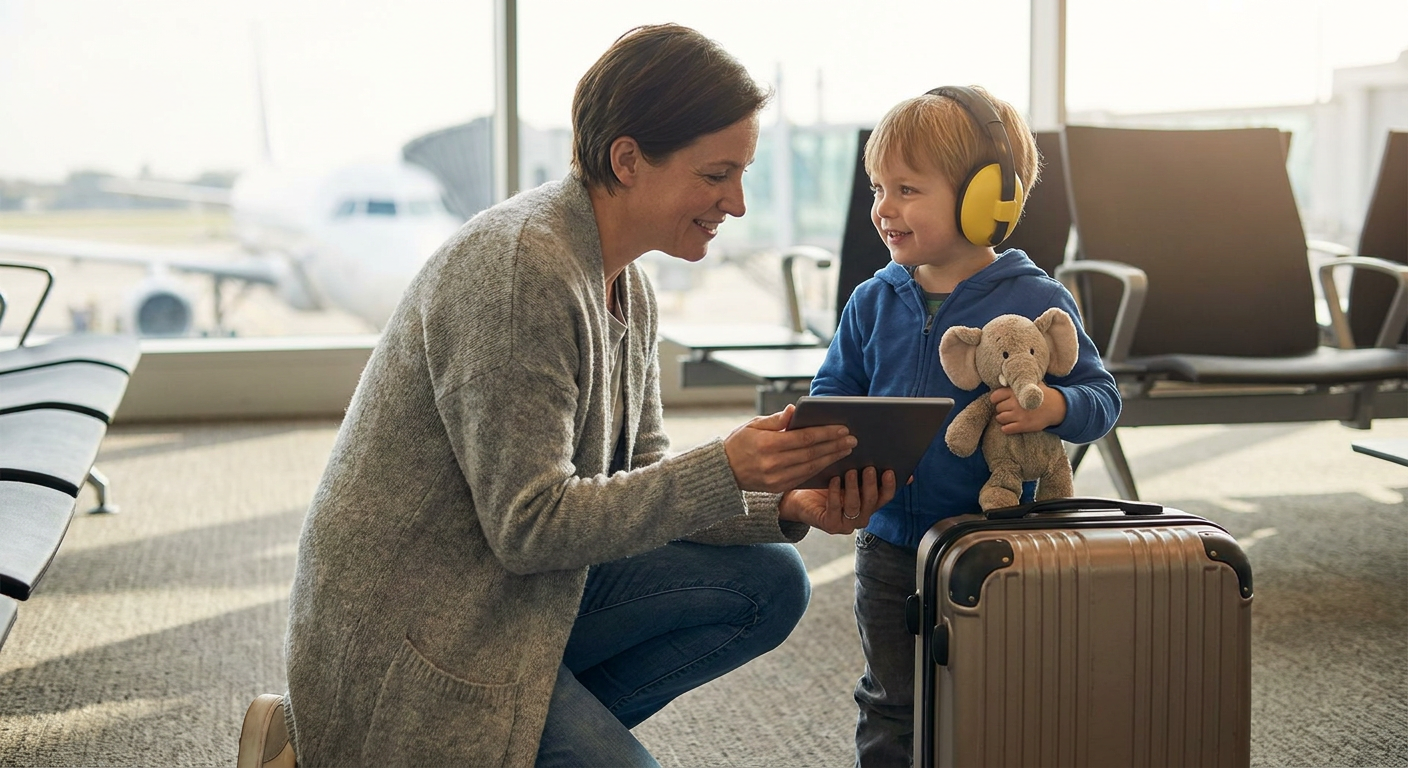
On the flight, focus on lowering friction instead of expecting perfect behavior. Headphones, familiar shows, gum or drinks for ear pressure when appropriate, a visual countdown, and calm reminders can all help. Younger children may need shorter expectations and more immediate reinforcement. Older children may benefit from scripts like, “I need a break,” “Can I use my headphones now?” or “Tell me when it’s time to board.”
If extra airport support would help, families can look into assistance options through TSA Cares before travel day. And if public overwhelm becomes part of the challenge, this guide to handling meltdowns in public goes deeper on that response without turning this article into a separate meltdown manual.
Car Rides: Plan for Sitting Time, Stops, and Sensory Regulation
Car travel often feels easier than flying because you control more of the environment, but long stretches in a seat can still be tough. Plan seating comfort, route timing, bathroom stops, snack timing, and how often your child may need movement breaks.
For younger children, it helps to break the drive into small, concrete chunks: one song, ten minutes, one more stop. Older children may do better with collaborative planning, like choosing stop intervals, picking in-car activities, or deciding the order of snacks and entertainment.
Low-demand activities usually work better than asking for too much participation when your child is already spending energy to stay regulated. Rotate supports before boredom or discomfort peak. Common pain points include sibling conflict, motion discomfort, food rigidity, refusing to get back in the car after a break, and total exhaustion near the end of the drive. After a difficult stretch, reduce demands instead of stacking more expectations right away.
If your family is also working on shorter outings in everyday life, this article on smoother community trips can support those practice moments without replacing travel-specific planning.
Hotel Stays: Set Up the Environment for Arrival, Sleep, and Recovery
Hotel stays deserve a plan of their own. A room that looks simple to an adult can still feel completely unfamiliar to a child with autism because of new sounds, lighting, bedding, smells, hallways, elevators, and bathroom changes.
If possible, think ahead about room setup: bed arrangement, blackout options, distance from elevators, food storage, and how easy the layout will be to supervise safely. Once you arrive, the first hour matters. Unpack the items your child is most likely to need first, preview the room, show the bathroom, set up sleep supports, and decide what can wait until later.
Younger children may need stronger bedtime anchors, like the same pajamas, the same order of steps, the same calming items, and a short visual reminder of what happens next. Older children may need clear room rules, privacy-respecting support, and protected downtime after outings. The goal is not to make the hotel feel perfectly predictable. It’s to make it familiar enough that your child can settle, recover, and rest.
If the Day Falls Apart: A Simple Reset Plan for Overwhelm, Delays, or Changes
When travel starts going badly, simple is better.
First, notice the early signs. Second, reduce immediate demands. Third, move to the safest and calmest option you have. Fourth, use familiar supports like a snack, headphones, movement, a comfort item, or a short visual reminder. Fifth, simplify the next part of the plan.
That may mean waiting to board until later, skipping a nonessential stop, ordering simple food instead of going to a restaurant, or turning the first hotel evening into recovery time only. The most useful question is not, “How do I push through?” It’s, “What change would lower stress fastest right now?”
If you want more support around public overwhelm or repeated hard transitions, this article on public meltdowns and this guide to navigating unexpected changes can help you think through those patterns more deeply.
Autism Travel Support Planner
Use this quick planner during the week before your trip and again on travel day:
- Before You Book: What part of the trip matters most, and what can stay flexible? Which route, timing, and lodging setup give your child the best chance of success?
- Before You Leave: What visual supports, comfort items, snacks, medications, and safety tools need to be ready? What should your child know about the order of the day?
- Flight Plan: What will help most during security, gate waiting, boarding, noise, ear pressure, and delays?
- Car-Ride Plan: How often will you stop? What is the bathroom plan? Which activities or sensory supports should stay within reach?
- Hotel Setup: What needs to be unpacked first? What should the first hour look like? Which bedtime anchors matter most?
- If the Day Falls Apart: What are your child’s early stress signs? Which demand will you reduce first? Where is the safest calm-down option?
FAQ
How can I prepare my child with autism for air travel?
Preview the steps of the airport day, practice waiting in small doses, pack regulation tools where you can reach them, and keep explanations simple. On travel day, focus on one step at a time instead of talking through the whole process at once.
What helps during a long car ride with a child with autism?
Comfort, predictability, and timing matter most. Plan stops before they are urgently needed, rotate low-demand activities, keep favorite snacks and calming tools nearby, and give transition warnings before stopping and restarting.
How can I make a hotel stay easier for a child with autism?
Set up the room quickly, establish the bathroom and sleep routine early, unpack familiar items first, and lower expectations on arrival. A calm first hour often makes the rest of the stay easier.
What should I pack for a trip with a child with autism?
Pack for regulation first: snacks, water, medications, comfort items, sensory tools, backup clothes, charging cords, sleep supports, and a few familiar low-demand activities. Keep the highest-value items easy to reach.
What should I do if my child becomes overwhelmed during travel?
Respond early when you can. Reduce demands, move to the calmest safe option, use familiar regulation supports, and simplify the next part of the plan. You do not have to keep every part of the original schedule for the trip to still be worthwhile.
Travel can be demanding for any family, and it often takes extra planning when a child with autism is involved. With the right supports, realistic expectations, and room to recover, families can make travel feel more workable.


