


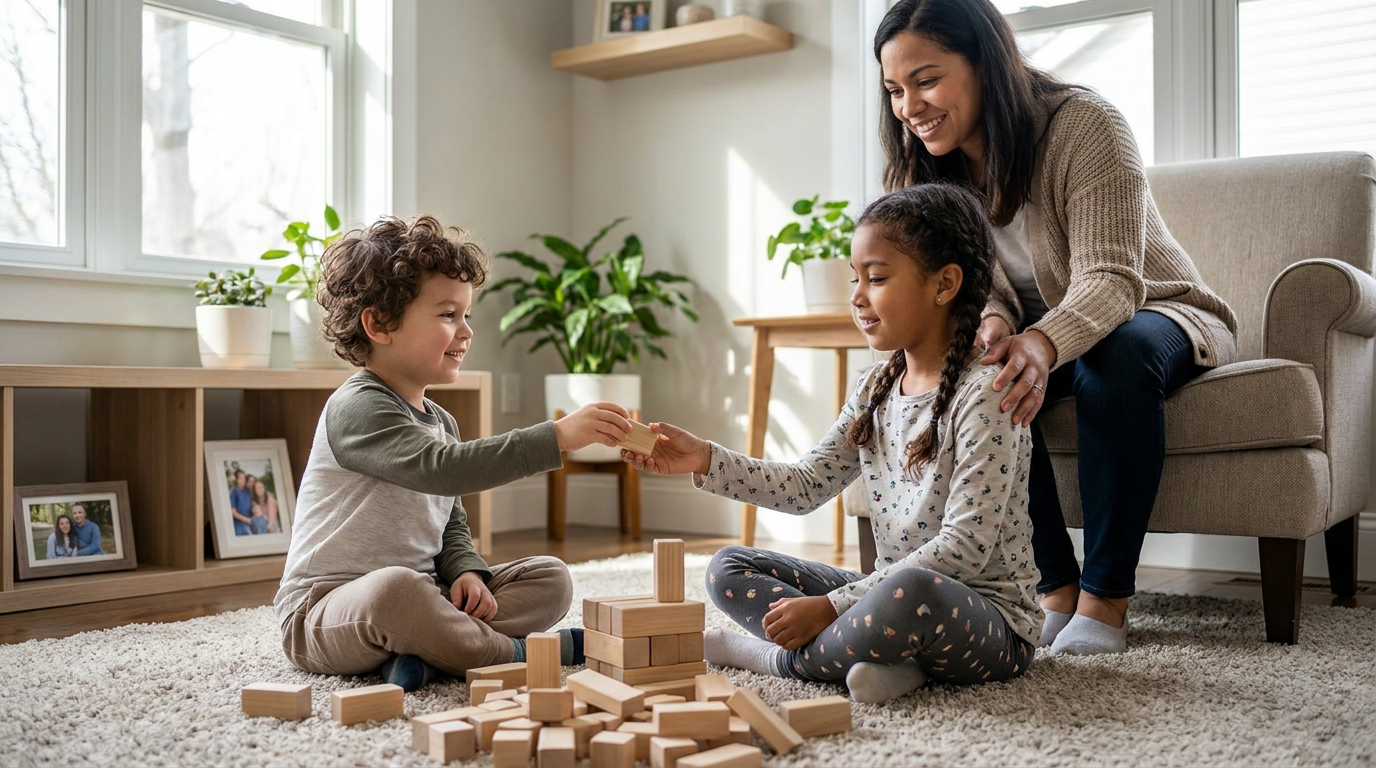
Parenting siblings of children with autism can feel like a constant balancing act. One child may need extra support, while another is quietly trying to make sense of changed routines, different rules, and moments that feel hard to explain. In many families, the strain shows up in everyday situations: interrupted play, public meltdowns, bedtime changes, or the feeling that one child gets more of your time.
This guide is meant to help with those real-life moments. You can explain autism in ways a sibling can actually understand, make room for complicated feelings, talk about fairness without becoming defensive, and create more chances for connection without putting too much on either child. The goal is not a perfect sibling relationship. It is a steadier family rhythm where both children feel seen, supported, and safe.
Why Sibling Support Matters in Everyday Family Life
Siblings often carry more than one feeling at a time. A child may feel loving and protective one minute, then frustrated, embarrassed, worried, or jealous the next. That does not mean something is wrong. It usually means they are trying to make sense of family life that feels different from what they expected.
Those feelings show up in small moments as much as big ones. Tension can build during transitions, shared play, public outings, bedtime routines, safety concerns, or any stretch when one child seems to need more help than the other. If parents avoid the conversation, children usually fill in the blanks themselves. That can turn into quiet assumptions like “Mom likes my sister more” or “My brother never gets in trouble.”
It also helps to keep one thing clear: siblings are children first. They can learn empathy, patience, and flexibility, but they should not be treated like junior therapists, built-in helpers, or the child who is always expected to be easy.
Age matters here too. Younger children tend to notice behavior differences before they understand why they are happening. School-age children are more likely to compare rules, consequences, and attention. Older children may feel the weight of public embarrassment, social stigma, or pressure to be extra understanding.
If you want a broader overview, this guide to autism in children and daily support can provide helpful background without turning this conversation into a full autism lesson.
How to Explain Autism to a Sibling in Age-Appropriate Language
The best explanation is usually simple, honest, and tied to what the sibling already sees at home. You do not need a long clinical speech. You need words that help your child make sense of real moments.
For a younger child, that might sound like this: your brother’s brain understands some things differently, loud sounds may feel bigger to him, and changes can be hard. For a school-age child, you can add that autism can affect communication, behavior, and sensory needs in ways that are not always obvious at first. For older children, it may help to talk more directly about privacy, peer questions, and why support needs can change over time. If you want a reliable starting point, the CDC overview of autism spectrum disorder is a clear reference.
What matters most is the message underneath the explanation: different support does not mean different value.
A few sample phrases parents can adapt:
- “Your sister is not getting different rules because she matters more. She is getting support that matches what is hard for her right now.”
- “Your brother is not trying to ruin the moment. His body is having a hard time staying calm, and we are helping him through it.”
- “You are allowed to have questions and feelings about this. We can keep talking about it.”
- “It is not your job to fix this. It is my job to help both of you.”
Try to answer the question your child is really asking. “Why does he act that way?” may actually mean “Is he safe?” “Why are the rules different?” may really mean “Do the rules still protect me too?” A short, honest answer now is usually more helpful than a long explanation that misses the real concern.
If you want help talking about a diagnosis with people outside your immediate family, this guide to explaining autism to family and friends is a useful next step.
The CLOSE Sibling Connection Map
One helpful way to think about sibling support is the CLOSE Sibling Connection Map. It gives you a practical way to slow down, respond to what is happening, and protect the relationship without forcing closeness.
C: Clarify What the Sibling Is Noticing
Start with the exact moment that is creating friction. Is your child upset about interrupted play? Afraid during a meltdown? Angry that bedtime changed again? Hurt because you had to leave their game early?
When you name the real trigger, your response gets more useful. Younger children may show confusion through tears, clinginess, or acting out. Older children may say it more directly: “Everything always has to be about him.” Before you correct the feeling, pause long enough to understand what just happened from their point of view.
L: Label Autism in Child-Safe Language
Once you understand what your child is reacting to, connect that moment to an explanation they can follow. Name what autism may be affecting in that situation, whether it is communication, flexibility, sensory processing, or emotional regulation.
Keep the goal small. You are not trying to explain everything about autism in one talk. You are helping your child understand one part of their family experience. It is normal for the questions to come back later, and that is often a good sign. It means your child sees you as a safe place to keep asking.
O: Organize What Is Different and What Is Still Fair
Fair does not always mean the same. One child may need more transition support, a quieter environment, or closer supervision. Another may need more explanation, more one-on-one time, or reassurance that their needs still matter.
What helps most is being specific. You do not have to defend every difference. You can simply explain what is different, why it helps, and what still stays steady for both children. Bedtime routines may look different, but both children still deserve predictability. Consequences may be handled differently, but both children still deserve respectful limits. One child may need more direct support, but both children still deserve meaningful time with a parent.
S: Support One Low-Pressure Connection Routine
Connection usually grows better through small, manageable moments than through forced bonding. Choose one routine that fits both children’s interests, communication styles, and tolerance levels. That might mean parallel play with separate materials, a short turn-taking game, setting the table together, or joining the same movement activity for five minutes.
Opt-in matters. Short duration matters. Success may simply mean the children shared space without conflict, or one sibling learned a better way to join, pause, or step away. That still counts.
E: Escalate When Sibling Strain Is Getting Bigger
Some sibling stress is part of adjustment. Repeated distress should not be brushed aside. Pay attention if your child becomes more withdrawn, unusually anxious, chronically resentful, or starts saying things that suggest they feel less important. Sleep changes, school stress, repeated conflict, or strong avoidance of the sibling can also signal that reassurance alone is not enough.
At that point, the next step may be more structure, not more pressure. Family support, parent coaching, or sibling-focused resources can help you respond more effectively while protecting both children.
How to Handle Fairness, Different Rules, and Attention Imbalance
Many of the hardest moments come back to fairness. One child gets more of your time. Plans change because of a meltdown. The sibling who is “doing fine” starts to feel invisible because they are not the child in immediate distress.
In the moment, keep your response short and steady. Later, come back to the bigger conversation when everyone is calmer.
What to say in the moment:
- “I know this feels unfair right now.”
- “I am helping your brother with something hard, and I have not forgotten about you.”
- “Different support is not the same as choosing one child over another.”
What to revisit later:
- what changed and why
- what your child needed in that moment
- what support you want to protect for them next time
- what family routines can stay more predictable
You do not have to tell siblings they should always be patient because their brother or sister has autism. A better approach is to acknowledge the strain while still protecting boundaries and safety. Younger children often do best with simple fairness language and clear next steps. School-age children may need more direct reassurance about attention and rules. Older children may need honest acknowledgment of embarrassment, privacy concerns, and mixed feelings that are hard to say out loud.
If your family needs more structure around routines and follow-through, articles on daily-life parent training support and when parent coaching may help can give you a clearer picture of what support can look like at home.
Low-Pressure Ways to Help Siblings Connect
A healthy sibling relationship does not have to look close all the time. Sometimes the most realistic goal is calmer shared space, fewer negative interactions, and more room for positive moments to happen naturally.
A few practical options include:
- parallel play with separate but similar activities
- sensory-friendly shared activities such as walks, music, water play, or simple crafts
- short cooperative routines like feeding a pet, setting out snacks, or putting books away
- helper-with-choice moments, where the sibling can join but is not expected to
- join-or-opt-out options, so neither child feels trapped in the interaction
Choose activities based on both children, not on an ideal picture of what siblings “should” do. Younger children often do best with side-by-side play or movement. School-age children may benefit from games with clear roles and stopping points. Older children usually need more autonomy and more respect for what kind of connection feels natural to them.
If shared play is especially hard right now, this guide to social skills and play development offers helpful context.
When a Sibling May Need More Support
Look for patterns that feel persistent instead of occasional: ongoing withdrawal, repeated anger, shame about the sibling relationship, school stress, sleep changes, or comments that suggest your child feels invisible. Not every hard feeling is a crisis, but repeated distress deserves attention.
A helpful response usually includes three things: validation, protected one-on-one time, and a plan. Validation sounds like, “I can see this has been hard on you too.” Protected time means your child does not only get your attention when the family is in crisis. A plan might include adjusting routines, preparing for common triggers, or getting outside guidance.
If caregiver stress is making those patterns harder to manage, this article on parent burnout support may help. For broader support options, this list of Georgia autism resources and family supports is a good starting point, and the Autism Speaks sibling guide can be a useful supplemental resource for families who want more age-appropriate tools.
Sibling Support & Connection Planner
Use this quick planner before a hard conversation, after repeated fairness conflicts, or any time you feel stuck between reassurance and structure.
- What my child is noticing: What exact moment, behavior, or change keeps coming up?
- What I need to explain: What part of autism or family support needs clearer language?
- What feeling needs validation: Is my child feeling confused, jealous, worried, embarrassed, angry, or left out?
- What support or boundary helps right now: Do they need one-on-one time, a shorter explanation, a visual routine, a break, or a clearer limit?
- One next-step connection idea: What is one low-pressure activity the siblings can share this week?
- Red flags that mean we need more support: Are there signs of withdrawal, shame, resentment, sleep problems, school stress, or repeated comments about feeling less important?
FAQ
How does having a sibling with autism affect a child?
It can affect a child in many different ways, including love, protectiveness, confusion, jealousy, frustration, guilt, or worry. The experience is not the same for every family, and honest communication, strong support, and predictable routines can make a meaningful difference.
How do I explain autism to my other children?
Use simple, truthful language tied to what they already see at home. Keep the explanation age-appropriate, invite follow-up questions, and come back to the conversation over time instead of treating it like a one-time talk.
What can I say when my child asks why the rules are different?
Try this: “Fair does not always mean the same. Your brother needs help with some things, and you still matter just as much.” Then explain one concrete difference and one thing that stays steady for both children.
How can I help my child cope with a sibling with autism without putting too much on them?
Validate their feelings, protect one-on-one attention, and keep responsibilities age-appropriate. A sibling can learn understanding without becoming responsible for managing behaviors or keeping the peace.
How can siblings build a better relationship with a brother or sister with autism?
Start with low-pressure connection, not forced bonding. Shared routines, side-by-side activities, and realistic expectations often work better than trying to create closeness on a timeline.
What are signs that a sibling needs more support?
Look for withdrawal, resentment, shame, stress, sleep changes, or repeated comments about feeling invisible. When those patterns keep showing up, it may be time for more structured family support.
Families often do better when sibling support is approached with the same steady care given to other parts of autism support. For parents looking for calm, practical guidance, Skyward Spectrum’s broader family resources can be a helpful next step.


