


If you worry about wandering, parking lots, water, or what could happen during an ordinary errand, you are not overreacting. For many parents of children with autism, safety concerns sit in the background of everyday life. They shape how you leave the house, how closely you watch transitions, and how much mental energy it takes to get through routines that might look simple from the outside.
That is why this topic matters. Safety skills are not something a child is expected to absorb on their own. They can be taught in a structured, practical way, with goals that match the child’s age, communication style, and real-world risks. In this guide, we’ll look at how ABA teaches safety skills, which targets often make sense to start with at home and in the community, how parents can help reinforce those skills, and when a concern needs more individualized support.
How ABA Teaches Safety Skills in Real Life
ABA teaches safety skills by focusing on what a child actually needs to do in a real situation. Instead of talking about “being safe” as a broad idea, a BCBA may look at the moments where risk is most likely to show up, such as rushing toward the front door, pulling away in a parking lot, or moving too quickly toward water, and then turn that into a clear, teachable response.
One common approach is Behavioral Skills Training, often called BST. In simple terms, BST usually includes four parts: explaining the skill, showing what it looks like, practicing it with support, and giving feedback right away. Safety teaching may also involve prompting, shaping, repetition, reinforcement, and planned practice in more than one place so the skill does not stay stuck in one setting.
It is also important to be realistic about the limits of teaching. A child learning to stop at a curb or come back when called still may need close supervision, door alarms, locks, pool barriers, or other environmental protections. Skill building matters, but it works best when it is paired with practical safeguards.
The right starting point also depends on developmental level. For one child, the first goal may be responding to their name or stopping on a one-word cue. For another, it may be waiting at a doorway, identifying a safe adult, or using an AAC button to ask for help. If you want a broader look at how ABA breaks larger goals into teachable steps, this guide to how ABA works offers helpful background.
The SAFER Skills Priority Path
When several safety concerns feel urgent at once, it helps to have a way to narrow the focus. The SAFER Skills Priority Path is a simple framework for deciding what to teach first and how to build from there.
S: Spot the highest-risk moments first
Start with the situations that create the greatest danger or the most daily stress right now. That might be unsafe exits from the house, pulling away near traffic, moving toward water, approaching unfamiliar adults, or struggling to respond during an emergency.
It is easy to make a long list of every safety concern at once. Most families make better progress when they choose one high-stakes situation first. That does not mean the other risks do not matter. It means the child has a better chance of learning one response well enough for it to become more reliable.
A: Assess what the child can already do
Before choosing a target, look at what the child does now in the risky moment. Do they stop when they hear their name? Do they bolt, freeze, or follow a prompt? Can they wait briefly, hold a hand, point to a caregiver, or use words, gestures, visuals, or AAC to get help?
This step should also include communication level, impulse control, sensory triggers, and setting-specific challenges. A child who does well at home may struggle in a busy parking lot. A goal should be based on current ability and real conditions, not just what adults hope the child can handle next.
F: Focus on one clear safety response
The first target should be small, concrete, and easy to see. “Be safe” is too vague to teach. “Stop when an adult says stop,” “wait at the door,” “hold hands in the parking lot,” “stay within arm’s reach,” or “go to the cashier if separated” are much clearer starting points.
When a goal is specific, adults can teach it more consistently and tell more easily whether the child is making progress. For children, especially younger children, one direct action practiced many times is usually more useful than broad language about danger.
E: Expand practice across real settings
Once a child can do the response in structured practice, the next step is using it in real life. That may mean practicing at the front door, in the driveway, near a quiet curb, in an almost empty parking lot, or during a short outing with strong adult support.
Consistency matters here. If one caregiver says “wait,” another says “stop,” and another uses no cue at all, the skill is harder to build. Early practice should stay brief, concrete, and well supported before expectations widen.
R: Review risk, readiness, and next-step needs
Progress is not just what happens during practice. The bigger question is whether the child can use the skill more reliably in daily life with the right supports in place. If the response is still inconsistent, the plan may need more repetition, a simpler target, or stronger environmental protections.
Review also helps families and clinicians decide what comes next. A child who can wait at the door may later work on opening it only with permission. A child who still bolts unpredictably may need the goal narrowed rather than expanded.
Safety Skills to Prioritize at Home
Home is often the best place to start because routines are familiar and practice opportunities happen often. The goal is not to cover every possible home safety skill at once. It is to choose the risk that needs the most immediate attention and build one dependable response around it.
Preventing unsafe exits and wandering from home
For many families, front-door safety is the most urgent concern. A helpful starting target might be stopping when a caregiver says “wait,” returning when called, standing on a marked spot near the door, or waiting for an adult before stepping outside.
If wandering or elopement risk is high, teaching should happen alongside environmental safeguards. Door chimes, locks placed appropriately, visual stop signs, and carefully planned transitions may still be necessary while the child is learning. Some children may need to begin with responding to their name or stopping on cue before they are ready for more independent waiting.
Navigating home hazards safely
Home hazards can include hot surfaces, sharp tools, medication, stairs, cleaning products, and water access in bathrooms or tubs. Rather than teaching “home safety” as one broad concept, it is often more effective to pair each hazard with one clear response: hands off the stove, ask before touching medication, wait for help on the stairs, or move away from the bathtub unless an adult is there.
This is also where simple language and visual supports can help. A short cue such as “hot, hands back” or “stop, ask for help” is often easier to use in the moment than a long explanation. If you want a broader look at step-by-step skill building in everyday routines, this article on daily living support through ABA goes into that in more detail.
Emergency response basics at home
Emergency teaching at home may include coming to a caregiver right away, moving away from danger, tolerating a short practice drill, or using a phrase, picture, or AAC button to ask for help. For some children, the first emergency-response skill is simply learning that a specific cue means “come with me now.”
These plans need to stay realistic. A child may respond well during practice and still need full adult support in a stressful real-world situation. Emergency planning should be individualized and reviewed regularly, not treated as a skill that stays mastered forever.
Safety Skills to Prioritize in the Community
Community safety can feel harder because the environment changes quickly and the margin for error is smaller. Many families find it helps to practice one short routine in one setting before expecting carryover everywhere else.
Street and parking-lot safety
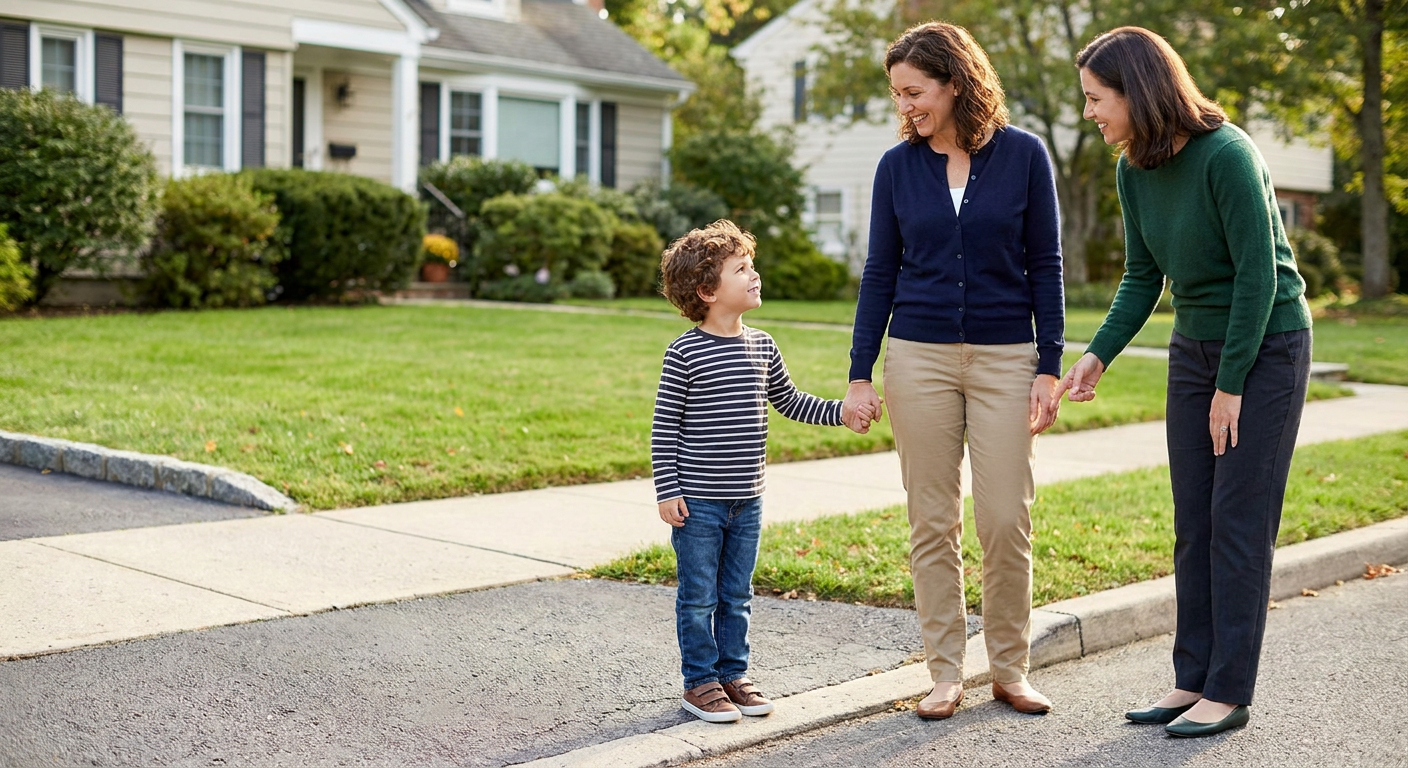
Street and parking-lot safety often starts with stopping at the curb, waiting before crossing, staying beside an adult, and getting in or out of the car in a predictable order. Practice usually goes better in controlled situations first, such as a quiet sidewalk or a less crowded lot, before adults expect the same response around traffic, noise, and time pressure.
Younger children, or children with higher impulsivity, may need closer physical support, shorter practice windows, and immediate reinforcement. That is not a setback. It is often the safest place to begin.
Water, playground, and public-space safety
High-risk settings like pools, bathtubs, splash pads, playgrounds, and open public spaces often require several layers of protection. A child may learn to stop at the pool gate, wait before climbing, stay within a visual boundary, or return when called, but supervision still needs to stay strong.
Clear actions tend to work better than broad reminders. “Hands on the stroller at the curb,” “feet stay on the mulch,” or “wait at the gate” gives the child something concrete to practice. In higher-risk settings, improving skill should lead to better support plans, not faster reductions in supervision.
Safe adults, asking for help, and responding in unfamiliar settings
Another important target is teaching children who to go to and how to ask for help if they become separated from a caregiver. Depending on the child, that may mean recognizing a staff role, handing over an ID card, using a short script like “I need my mom,” or activating a practiced AAC phrase.
Communication adaptations matter. A child with limited spoken language may need visual supports, a rehearsed pointing response, or a specific button on their device. For families who also want help thinking through broader outing routines, these tips for smoother community trips offer extra guidance without repeating this safety-focused article.
Parent Safety Skills Priority Planner
When everything feels urgent, a simple planning tool can make the next step easier to see. The Parent Safety Skills Priority Planner is meant to help families move from generalized fear to one coordinated plan.
Highest-Risk Situations
Use this section to identify the most urgent safety concern right now:
- Wandering or unsafe exits from home
- Street or parking-lot safety
- Water safety
- Home hazards such as heat, medication, or sharp objects
- Safe-adult recognition or stranger safety
- Emergency response
Choose one category first. The goal is not to solve every safety concern at the same time.
Current Child Response
Use this section to describe what the child does now in the risky moment:
- Notices danger or does not notice it
- Stops, bolts, freezes, or follows a prompt
- Responds to their name or does not respond consistently
- Follows one-step directions or needs more support
- Uses spoken language, gestures, visuals, or AAC to communicate
- Needs full adult support in that setting
This keeps the plan grounded in the child’s current skills instead of assumptions.
Next Teaching and Support Plan
Use this section to define the immediate next step:
- One safety response to teach first
- One cue or prompt all caregivers will use
- One place where practice will begin
- One reinforcement plan for correct responding
- One way to track whether the skill is carrying over
- One threshold for contacting the BCBA right away if the concern stays high-risk
The more specific this section is, the easier it becomes for caregivers to stay consistent.
Reinforcing Safety Skills Across Caregivers and Knowing When Extra Support Is Needed
Children usually learn safety skills faster when the adults around them use the same cue, expect the same response, and reinforce the same target. That may mean everyone uses “wait” at the door, everyone practices stopping at the same curb, or everyone follows the same parking-lot routine.
Carryover does not have to be long or complicated. Short practice windows, visual reminders, quick role-play before an outing, and a brief debrief afterward can all help. What matters most is that adults stay aligned instead of changing the goal every few days.
Realistic generalization starts with supported success. A child may first show the skill with one parent, then with another caregiver, then in a new setting, and only later in busier or less predictable situations. If you need more help building consistency at home, this overview of ABA parent coaching explains what that support can look like. Families who want more clarity on the clinician’s role can also read what a BCBA does in an ABA program.
Some concerns should go back to the BCBA right away rather than being handled as casual carryover. That includes persistent elopement, water-related danger, unpredictable bolting in public, lack of response to practiced safety cues, or situations where unsafe behavior is escalating faster than the family can manage safely. At Skyward Spectrum, that kind of concern is best addressed through a coordinated plan that combines clinical teaching, caregiver support, and practical environmental safeguards.
FAQ
What safety skills can ABA therapy teach children with autism?
ABA can target a wide range of safety skills, including waiting at doors, stopping at curbs, staying close to an adult, moving away from hazards, identifying safe adults, and asking for help. The right targets depend on the child’s risk profile, communication style, and the settings where safety concerns show up most often.
How does Behavioral Skills Training work when teaching safety?
Behavioral Skills Training typically uses instruction, modeling, rehearsal, and feedback. In practice, that means an adult explains the skill, shows it, helps the child practice it, and gives immediate correction or reinforcement so the response becomes clearer and more consistent.
How can ABA help prevent wandering or elopement?
ABA can help by identifying when elopement happens, choosing one response to teach first, and practicing that response across real situations. It can also support caregiver consistency, but it should be paired with supervision and environmental safeguards rather than treated as a stand-alone solution.
Why should safety instruction be tailored to a child’s developmental level?
The first safety target for one child may be too advanced for another. Communication level, impulse control, ability to follow cues, and sensory needs all affect what the child can realistically learn first. For younger children especially, safety teaching often needs to stay concrete and highly supported.
What role do parents play in reinforcing safety skills at home?
Parents help safety skills carry over by using consistent cues, practicing briefly during daily routines, and sharing observations with the BCBA. Their role is to reinforce the plan and help it generalize, not to design the entire safety program on their own.
What safety skills should be taught first?
Start with the risk that creates the most immediate danger and choose the smallest teachable response for that situation. The SAFER Skills Priority Path helps families narrow the focus so the first goal feels clear, realistic, and useful.


